Showing posts with label 断熱. Show all posts

Wednesday, 26 January 2022

Which insulation should I use? Introduction

People often wonder what kind of insulation to use. This is a great question, which we will come to later. Two questions are more important: Should I use insulation? and Where should I put it?

Yes!

Whatever insulation you are using is almost certainly better than not using insulation. Any insulation will reduce your heating bills and cooling bills and make the building more comfortable. If you're comparing the environmental impact of different kinds of insulation, then you first need to compare that one-off impact with the on-going impact of your heating or cooling. 

Where?

Putting insulation in the right place is important, and this means insulating all around the building. Putting on an extra scarf in the winter will keep you warm, but it will only be really effective if you're wearing a warm coat and good shoes. And if you remembered to put on your trousers. In the same way, sticking some more insulation into a wall cavity will make a bigger difference if you're also insulating the rest of the walls, the roof and the floor, and making sure that your windows are insulating properly. More insulation is usually better, but going from zero to 10cm will have a much bigger effect than going from 10cm to 20cm. If there is an uninsulated part of your building, those extra 10cm would be much more effective there.

How does insulation work? 

Insulators slow down heat. Some materials, like metals, are good conductors and will quickly move heat. You can tell a good conductor because it feels cold when you touch it. Unless it has just been on the cooker, in which case it may feel very hot. Good conductors are bad insulators. 

There are many insulators around you. Wood and paper are insulators, the wool in your sweater is a good insulator and the polystyrene trays from the supermarket are very good insulators. The best insulator around you is probably air. And most insulation for building works by tapping air.

Foam of Fibre? 

Insulation can be broadly divided into two groups: foams and fibres. 

Fibres

Examples of fibres are glass wool, rock wool and cellulose fibre. Fibre insulation works by trapping air among the fibres. This is exactly the same as your woollen sweater or down jacket, and insulation made from textiles is also available for buildings, including recycled materials or new wool. Fibre insulation does not usually have any compressive strength, so while it is good to add to walls and ceilings, it is not a good idea to put under a wall or foundation. Also, while the insulation works by fibres trapping air, it will stop working if air is getting through the insulation, and bad things can happen if water gets in. Therefore, it is very important to add weather protection on the outside and an airtight barrier on the inside of fibre insulation. 

Foams

Examples of foam insulation are polystyrene, polyurethane, polyisocyanurate and  phenolic foam. Polystyrene is available both expanded, known as EPS and styrofoam, or extruded, which is known as XPS, E is for expanded, X is for extruded and C is for confused!! The foam may be made of bubbles of air, or another gas that could be a better insulator, so foam insulators can have better performance than fibre insulators. This means generally that a thinner layer of foam will keep the house as warm as a thicker layer of fibre insulation. Compared with fibre insulation, especially cellulose fibre, the manufacture of foam insulators can use a lot of energy and fossil fuels, and can release some toxic chemicals. However, a thinner layer of insulation may mean thinner walls or roof and less need for other building products, so calculating their impact may not be simple. Or given the same wall thickness the higher performance will mean less heating over the lifetime of the building, which will usually save much more energy than the manufacturing of the insulation. 

Foam insulation can be strong, since the foam structure is rigid, so it can be used under floors, under foundations, or anywhere else where there is a load. 

While foam insulation does not usually let any air or moisture through, there can be gaps between the foam and the structure, for example where expanded polystyrene has been put in the space between pillars and beams of a wooden frame. If there is an earthquake and the building moves, this can leave a permanent gap. There may also be gaps between panels from the beginning if they are not installed carefully.

Depending on air flow, a gap of one millimetre in insulation can lead to a drop of performance by 50%, as well as increasing risk of condensation.

Form

Insulation may be available in four different forms: flexible blankets, rigid panels (batts), loose fill or sprayed foam. The construction technique will usually dictate what form the insulation must be in. Most insulation materials are available in different forms. For example cellulose fibre is available as flexible blankets, rigid panels or loose particles that can be blown into a cavity.

Shape and Size

Blankets and batts often need to fit spaces and they are available in standard widths. Insulation can be cut on site but this takes time, may increase gaps and may lead to more waste. 

Safety

Most insulation is harmless. Commercially available insulation materials have been tested for toxicity and will be fireproof, as long as the manufacturers have not lied in their testing. Glass wool is not nice to install, and may be unpleasant when a building is demolished or renovated but once within a wall structure it should not harm inhabitants. 

Strength

If you need insulation under a building then it needs to be structurally strong. This usually limits your choice to foams such as XPS (Extruded polystyrene). Some cellulose-based structural insulation is available. 

Open or Closed?

Insulation usually works by trapping air. Wool-based insulation traps air between the fibres, which are open and will usually allow some air to pass through the insulation. Foam insulation will usually stop air from getting through. Cellulose insulation is not as open as wool-based insulation, but not as airtight as foam. Since insulation is only effective and safe from condensation when it is airtight, open insulation requires an airtight barrier on one or both sides. Attention will be needed for joints and boundaries of insulation that is more airtight. Closed insulation will not let air through, but careful installation is needed to stop an gaps that air may get through.

Moisture Content

Different materials hold different amounts of moisture. Insulation with a capacity to hold moisture may be helpful in stabilising humidity levels in the situation where the absolute or relative humidity outside is not comfortable inside. Alternatively, there may be a risk where humidity builds up levels of moisture within the structure that can cause building damage or health risks.

Moisture Permeability

As well as the amount of water a material can hold, it may be better or worse at letting moisture through. 

Temperature Range

With some insulators, performance changes with temperature, so they may be good inside your walls, or above a foundation slab, but not so good on the outside where it gets colder. 

Heat Capacity

Different insulation materials also hold different amounts of heat. Increasing the thermal mass of the building will make more stable temperatures. In most cases, the insulation performance, in other words the thermal conductivity, is much more important than the heat capacity. 

Thermal Conductivity or U value

Last, but very much not least important! Thermal conductivity,  gives a value of the material. U value is for a particular thickness. For both, lower values are better insulators. If the insulation is twice the thickness, the U value will halve. U value is measured in W/m2K and thermal conductivity is in W/mK.

Ecological Decisions

There are many different insulation materials available. They come in different forms and give different performance in terms of heat, airtightness, moisture and sound, and they have different price tags. There is no single "best insulation material". Architects and builders may have favourite materials, and manufactures usually promote their own materials and point out shortcomings in competing materials (for example this online article by the founder and managing partner of Havelock Wool).

There are also different impacts on environment during manufacture and disposal, but to quote Schmidt et al. (2003):

"Many people believe that the emerging insulation products based on biological resources (cellulose), such as flax and paper wool, are much more environmentally friendly than a product based on natural mineral resources such as stone wool. This belief may, however, be unfounded."

If you are worried about fossil-fuel based insulation materials, you need to first consider how much fossil-fuel energy the insulation will save. Sure, you may not be planning on burning gas or oil, but if you're heating with electricity, that electricity has been made with fossil fuels. It may be "green" energy, but the solar panels and wind farms have been made with fossil fuels, and the hydroelectric dams poured with concrete, so you're still not at zero carbon. And even if you did find a way of producing energy without any carbon input, you'd need to calculate whether it's better to use it for your house, or supply that energy somewhere else to offset other people's carbon use.

Schmidt et al. conclude: "The energy and environmental impacts saved during the use phase [of insulation] are more than 100 times larger than the impacts in the rest of the lifecycle".
This sentiment is repeated by the US National Park service for the Pacific Northwest:

"Do not substitute a "green" insulation material for a non-green material if doing so will result in lower overall energy performance. Even though the environmental impacts of the insulation material might be lower for the green product, the overall environmental impact of the building would likely be greater by lower insulating values."

So while important, before you worry about what happened during the manufacture of the insulation, and what will happen if someone burns the insulation at the end of its life, the first thing to worry about is burning less to heat the house while the insulation is doing its job. Building constraints may limit the thickness of insulation, in which case some insulators may not have sufficient performance. Even if thickness is not limited, the extra thickness required for lower performance insulators may require extra materials to keep it in place and more external wall finish to cover it.

It may also be that natural materials attract "natural" pests, molds and fungi. You may want a material that will decompose naturally after its lifetime, but you definitely do not want the material to decompose while it is part of your building. Until the 19th century, the only insulation materials were organic, and the levels of insulation ranged from poor to non-existent. With the new scientific understanding and product availability of the industrial revolution, man-made materials became available, and these were used because they were cheaper, performed better, and would last longer than natural materials. The higher energy costs in the long depression of 1873-1896 boosted use of man-made insulation materials in industrial sites, and a hundred years later the oil shock gave another incentive to insulate homes (see Bozsaky, 2010 for more detailed history). Many "natural" insulators are recent developments that package natural materials in familiar forms of man-made insulation products. They do not necessarily have longer and more reliably determined lifetimes, or lower toxicity than man-made materials, and they may depend on chemical treatment to make them resistant against fire and pests.

In terms of carbon emissions, wood-based products are sometimes considered carbon-negative, since carbon captured by wood is being stored in the building. This may be true, but if the wood were not used in the building would it still be a living tree? Read more about that in a previous post.

References

Bozsaky, David (2010). The historical development of thermal insulation materials. Periodica Polytechnica Architecture, 41. 49-56. doi:10.3311/pp.ar.2010-2.02.

Danielle Densley Tingley, Abigail Hathway, Buick Davison, & Dan Allwood (2017). The environmental impact of phenolic foam insulation boards. Proceedings of the Institution of Civil Engineers - Construction Materials, 170(2). https://doi.org/10.1680/coma.14.00022

Danielle Densley Tingley, Abigail Hathway, Buick Davison (2013) BIG Energy Upgrade: Environmental burden of insulation materials for whole building performance evaluation. University of Sheffield.

Department of Interior. (nd) Environmental Considerations of Building Insulation
National Park Service – Pacific West Region 

Passivhaus Plus (2016). Cellulose insulation improves airtightness by 30% — PYC Systems

Seyedeh Shiva Saadatian (2014). Integrated life-cycle analysis of six insulation materials applied to a reference building in Portugal.

Schmidt, A., Clausen, A. U., Kamstrup, O., & Jensen, A. A. (2003). Comparative Life Cycle
Assessment of three insulation materials—stone wool, flax and paper wool. 

Anders SchmidtAllan Astrup JensenAnders U. ClausenOle Kamstrup (2004). A Comparative Life Cycle Assessment of Building Insulation Products made of Stone Wool, Paper Wool and Flax: Part 1: Background, Goal and Scope, Life Cycle Inventory, Impact Assessment and InterpretationThe International Journal of Life Cycle Assessment 9(1): 53-66 https://www.researchgate.net/publication/282754710_A_Comparative_Life_Cycle_Assessment_of_Building_Insulation_Products_made_of_Stone_Wool_Paper_Wool_and_Flax_Part_1_Background_Goal_and_Scope_Life_Cycle_Inventory_Impact_Assessment_and_Interpretation

Thursday, 4 November 2021

Are you positive wool is carbon negative?

I'm trying to understand the carbon footprint of buildings, and I always hit a mental roadblock when I see negative numbers. This just struck me on a list of insulation materials where wool was sticking out of the wrong side of the graph. There are also negative carbon footprints for cellulose fibre and cork. This negative accounting applies not only to insulation products but also structural materials such as wood.

Wood is certainly a great material to build with, and is definitely going to emit less carbon into the atmosphere than concrete, steel or glass. It also contains more carbon, and any atom of carbon in the building is one less molecule of carbon dioxide or methane in the atmosphere. But does that make its impact negative?

I have a couple of thought experiments that make me skeptical. First, what if you used twice as much wood on a building project?

If wood is carbon negative, then more wood would reduce the carbon footprint of the building. So just sticking a load of extra planks around the building would make it more "green", even if you use the same amount of concrete, steel and glass. Or you could just deliver the wood to the site and leave it in a pile on the ground. But you've cut down twice as many trees, so how can that be better?

Next thought experiment: what if every man-made structure used wood?

This would be impossible because human structures outweigh biomass. You would run out of trees, and all other living things. The planet is not a factory and you can't just increase production because there is more demand. Tree growth is limited by the amount of sunlight that falls on the trees, the area their roots have to grow into, and their access to water. Trees can take decades to grow and absorb the carbon stored in them. We have to be careful with our applications of economic calculations on natural systems.

So I'm starting off sceptical of a negative carbon impact for wood, which is made from plants that spend their life absorbing carbon from the atmosphere. What about wool? That comes from animals which spend their life emitting carbon dioxide and methane. But wool is also listed on the negative side of the carbon impacts.

Of course wool contains carbon and that carbon comes from grass, and the grass has captured the carbon from the atmosphere. So I guess you could argue that the carbon is being sequestered and stored in the building rather than being left in the atmosphere. That's lovely, but at what cost?

Sheep are warm-blooded animals, which means that most of the calories they consume go into maintaining their body heat. Even though they are wearing highly insulating fleeces over 80% of their calorie intake goes into keeping warm. Given that they are walking around and growing fat and muscle, it's hard to imagine more than a couple of percent of those green carbs they are eating going into wool.

I could do some calculations on the back of an envelope, but instead I looked at published research papers. Brock et al. (2013) looked at a farm in New South Wales and estimated 25 kg of CO2e (carbon dioxide equivalent) per kg of wool at the farm gate. A study on farms in Patagonia by Peri et al. (2020) estimated around 8-19 kg CO2e per kg of wool. 

CO2 is made up of one carbon atom and two oxygen atoms, so burning a kilogram of carbon will give us about 3.7 kg of carbon dioxide, or living things will turn 3.7kg of atmospheric carbon dioxide into one kilogram of biological carbon. So even on a good day, assuming that sheep's wool is 100% carbon, taking the lowest figure in those studies, and ignoring manufacture and transport, for each kg of wool in the building there would be well over two kg going into the atmosphere. Am I missing something? 

I was only thinking about sheep working to produce wool, but of course they produce meat as well. Both papers note that meat production changes the estimate, which accounts for some of the range in the second study.

Sheep not only produce wool and meat, they also have other effects for land management. They are excellent at deforestation. Even if they cannot cut down trees, they will eat any saplings before they can grow and make sure that the trees never grow back.

Sheep in front of denuded mountains
Sheep farming:
Causing deforestation for at least six millennia 
You can see in the background of this picture from the Campaign for Wool "Why to use wool insulation." It should be titled, "Sheep farming: Causing deforestation for at least six millennia!" People talk about wolves in sheep's clothing, but in terms of ecological impact: compared to sheep the wolf is a lamb. Historically speaking this has been very helpful as sheep have cleared the way for other kinds of agriculture and for urban development. We are now in different times. As an Englishman these rolling hills with drystone walls and woolly sheep seem like a perfect rural scene, but it is as man-made as a concrete jungle.

Of course using wool insulation in a building is going to lead to less energy use in your house, like any other insulation. Using insulation is almost certainly a better choice than not using insulation, which would force the inhabitants of the building to use more energy to stay warm or cool. But that is a choice between two different energy uses. You can use all the insulation in the world, and your heating bills are never going to be negative.

And wool may be a lower-carbon option than other insulation materials such as polyurethane or extruded polystyrene. But you may not want to use wool underneath your foundation, and you may find that higher performing insulators can be thinner, which may reduce the need for other building materials.

I don't want to suggest that wool is a bad insulator. Just let's be honest about its carbon impact, think a bit more about the ecological impact of sheep farming and give up with the brownie points.

Sequestering carbon is a good idea, and if we can find places to store carbon, that will help keep it out of the atmosphere. But negative numbers don't exist in the real world. I don't think we can ever make a truly carbon-negative building, any more than we can generate energy by taking carbon out of the atmosphere.

We can just try to reduce the impact as much as possible.

References

Photo from: 
Campaign for Wool (2020). Why use wool insulation in your home? http://www.campaignforwool.org/why-use-wool-insulation-in-your-home/

Jan Zalasiewicz, Mark Williams, Colin N Waters, Anthony D Barnosky, John Palmesino, Ann-Sofi Rönnskog, Matt Edgeworth, Cath Neal, Alejandro Cearreta, Erle C Ellis, Jacques Grinevald, Peter Haff, Juliana A Ivar do Sul, Catherine Jeandel, Reinhold Leinfelder, John R McNeill, Eric Odada, Naomi Oreskes, Simon James Price, Andrew Revkin, Will Steffen, Colin Summerhayes, Davor Vidas, Scott Wing, & Alexander P Wolfe (2016) Scale and diversity of the physical technosphere: A geological perspective. The Anthropocene Review, vol. 4(1), 9-22. https://journals.sagepub.com/doi/full/10.1177/2053019616677743

Yinon M. Bar-On, Rob Phillips, & Ron Milo (2018) The biomass distribution on Earth. PNAS, 115 (25) 6506-6511; first published May 21, 2018; https://doi.org/10.1073/pnas.1711842115 https://www.pnas.org/content/115/25/6506 

Brock, Philippa M., Graham, Phillip, Madden, Patrick, & Alcock, Douglas J. (2014). Greenhouse gas emissions profile for 1 kg of wool produced in the Yass Region, New South Wales: A Life Cycle Assessment approach. Animal production science, 53(6). https://www.researchgate.net/publication/268631844_Greenhouse_gas_emissions_profile_for_1_kg_of_wool_produced_in_the_Yass_Region_New_South_Wales_A_Life_Cycle_Assessment_approach 

Pablo L. Peri, Yamina M. Rosas, Brenton Ladd, Ricardo Díaz-Delgado, & Guillermo Martínez Pastur (2020). Carbon Footprint of Lamb and Wool Production at Farm Gate and the Regional Scale in Southern Patagonia. Sustainability,12(8), 3077https://www.mdpi.com/2071-1050/12/8/3077 

Friday, 20 January 2017

U Value Calculators: U is for useful or unilateral?

I realised my calculation for the heat saving of installed insulation for the lesson on economics was wrong. Instead of calculating how much heat the insulation stopped, I was just working out how much it let through. Of course to calculate how much less heat is going through a wall after you add insulation, you need to know how much was going through the wall before you added the insulation. So, I wondered, what's the U value of an uninsulated wall? 

Google will have the answer, I thought. 

But Google didn't have a simple answer. It did have several links to U value calculators. For example this one from British Gypsum
It works very well, and allows you to put in various wall structures, showing a nice diagram of what you are doing. You need to have one layer of Gyproc products, though.

Similarly, the innocently titled uvalue-calculator.co.uk is great for anything involving Kingspan products. No good for calculating a wall without insulation.

The best I could find was from Changeplan.co.uk. You can add as many layers as you like from a drop down list, or even add your own materials and put in thermal conductivities and thicknesses. When you add them to the wall, you can show what percentage of the wall they are covering, which is useful if you have insulation between pillars and studs.  


In the end I decided to just assume an original wall U value of 1 W/m2K, for the sake of easy calculation. 

One important thing to remember is that the more insulation you have, the less effective any extra layers will be. So the first 50 mm is worth a lot more than the last 50mm, although the cost may be no different. In fact as you add more it can sometimes become more expensive if you need extra materials to support the cladding. 

Friday, 15 January 2016

Lesson 12, part IV: Life cycle analysis

So you have to look at the whole lifecycle, like we did with power generation. We need to look at positive and negative impacts during manufacture, installation, use, decommissioning and disposal.
Let's look at some glass wool insulation. You can get a roll 11 metres long, 910 mm wide and 100 mm thick for around 6,000 yen. For the same price you could get around 90 litres of paraffin. So which should you get?

You need to keep warm, and you can either wrap your house in the glass wool, or burn the paraffin. How long would it take for the insulation to save the energy in the fossil fuel?

The glass wool has a U value around 0.44 W/m2K, and we can assume 80 thousand kelvin hours per year heating demand. There's about ten square metres of it, so putting it on a wall will stop something like 352 kWh of heat per year.

A litre of paraffin has around 9.8 kWh of energy, so the 90 litres have 880 kWh.

Therefore, it will take about two and half years of heating bills to pay back the insulation costs.

We're forgetting a few things in our calculations. Of course we need a heater to burn the paraffin, and we need to install the insulation. It's not going to make us any warmer just by buying it and putting it in the corner.

We're probably not starting from zero insulation, but adding that insulation on top of existing walls. If we already have a U value of 0.44, this extra layer will only save half the heat. The more insulation we have, the less heat there is for extra insulation to stop.

We also need to remember the Jevons paradox. If a house is poorly insulated, and paraffin needs to be bought and burnt every time we want to heat it, it is probably not going to be at that ideal inside temperature all the time.

If we have a traditional building with very little or no insulation, the temperature will be low a lot of the time, and the heating bills will be moderate.

We could put more heating in to get the building to a comfortable temperature, but the heating bills will be very high.

Adding a little insulation will mean the temperature is higher, but we are probably going to be using the same amount of heat we started with to keep it comfortable for longer. This is the Jevons Paradox.

If we get enough insulation, then the temperature can be kept comfortable the whole time, with much lower heating bills.

A little insulation is a dangerous thing!

Back to the insulation and heating oil, we can also look at the carbon costs. While the financial costs were similar, in terms of CO2 emissions, burning the paraffin will emit two hundred times more carbon than manufacturing the glass wool. This puts the carbon return on investment around five days.

In all these calculations we need to look at the trade-off between running costs and lifetime, since the total cost of the house includes initial costs plus running costs multiplied by the lifetime. The length of the lifetime makes a difference to these calculations. If you have a building component with a pay back of twenty-five years, that makes sense in a house that will last a hundred years, but not in one that will last fifteen years. But who would build a house that only lasts fifteen years?

So we have a vicious cycle here where houses are worth nothing after less than twenty years. This means banks give small loans, buildings are built cheaply, they are not maintained and are often knocked down within twenty years.

This short lifetime means that return on investment calculations will prevent investment in long-term energy saving technology.

More serious, short lifetime of building means massively more energy is spent on the buildings. Low energy investments are usually tiny percentages of the total building cost. A building that uses half the energy over its lifetime does not use twice as much energy to make. It may use ten percent more. Often low energy buildings are high technology and while the costs may increase, in carbon accountancy there is no difference.

So if buildings have a lifetime of twenty years, they could be using four or five times more energy than in another country where their life expectancy is a hundred years. This is obvious. The reasons why Japan has a disposable building culture are a little more complicated. How Japan can get out of this situation is the trillion yen question!

References
Ito, Akiko (2013). Policy and programs for energy efficient houses and buildings
Further reading
Further listening
Freakonomics: Why are Japanese homes disposable?

Wednesday, 11 November 2015

Lesson 4. How to slow down heat

Some questions for starters:
How do you stop heat flow?
What is a "thermal envelope"?
What is "heat loss form factor"?
What can nature tell us about building a low-energy house?
Are there are situations when you don't want high insulation and low form-factor?

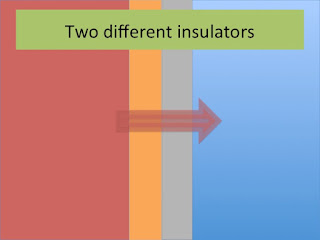
The first four were revising what happened the previous week. This was especially helpful for two of the students who had missed the last lesson. After reminding them of fourier's law, I started making things a bit more complicated. What if there are two different insulators? You know, like in the real world. Because you can't just make a building out of glass wool. I guess you could try to make one out of polystyrene, but it would probably break. Or blow away. 

First of all, and with the lobster fresh in our minds, I put a layer of glass wool on top of a layer of wood. I should have brought some actual insulation materials to the class to show the students what I was talking about, but I don't have any handy. I saw some bits of foam insulation on a building site yesterday, ready to go under the floor I think. If I go today, there may be some offcuts in their skip. I can probably work out better ways than prowling around builders' rubbish, but maybe not much better! And I wouldn't really want to bring glass wool to the class.

Anyway, absent of real materials, I used a powerpoint slide.
I told them about the R value, which is the inverse of the U value. This is resistance, and works just like resistance in an electrical circuit. This seemed to be familiar to most of them, not just the electrical engineer and the IT engineer in the class. In the same way as adding the resistors together, you can add up the resistances.

In terms of U value, it looks a bit more complicated: 1/U = 1/U1 + 1/U2 + ...

We have to remember it's upside down. This made one of the students laugh, as he remembered a scene in Pirates of the Caribbean. This equation is a bit like that. First you have to turn each of the maps (U values) upside down, then you have to turn the whole boat, I mean ship, upside down. 

Next I showed them some insulation in parallel. We used the same amount of insulation, but instead of a 100mm layer of wood on top of a 100mm layer of insulation, we had 200 mm of wood next to 200 mm of insulation.

Before starting the calculation, I got them to guess whether this would be better or worse than the last case, and they guessed it would be worse, so the U value should be higher. Sure enough, when they did the calculation it came out worse. 


Next, we delved further into the real world with a mixture of serial and parallel elements. 

There are two ways you can work this out. The serial method is to break it up into layers, calculate the R value for each layer, then add the R values. The middle element has 90% insulation and 10% wood, so you need to work out the U value of that by adding 9/10 of the insulation U value and 1/10 of the wood U value. 
The parallel method is to break it up into different bits of wall, work out their U values, then average those. 

I got half the class to work this out with the serial method, and the other half to work it out with the parallel method. I had hoped they would come up with their answers at more or less the same time, so I could then compare them. The two methods produce two different answers, and I was hoping for an argument to ensue, in which both sides would recheck their numbers, and insist they were correct.

In practice what happened was that the highly numerate students finished working out the first calculation, I suggested they try using the other method, which they also worked out, realised the two answers were different, and the less numerate students were still struggling with the first calculation. By this stage of the course, I should really have worked out which students were which, and paired the mathematical with the non-mathematical, so they would help each other, then go and help other pairs when both of them had finished. I did regroup them to some extent at the beginning of the lesson, but need to work a bit harder next time.  

So we established that the two methods produced different results. Here was another of those important lesson that has relevance way beyond low energy building. If you do two calculations and get two different answers, there are three possible reasons: one of the answers is correct and you made a mistake in the other one; you made a mistake both times; or you are using two different methods that produce different answers. Getting calculations right is a good idea, since you could be paying for the wrong answer in heating or cooling bills for the rest of your life. A few minutes checking the calculations is worth it!

So, the two methods gave different answers, and I wondered, in a rhetorical sort way, whether the formula for serial or the formula for parallel insulation was incorrect. One student suggested the parallel calculation was wrong because this wouldn't happen in the real world. Why on earth would anyone put insulation between bits of wooden structure? 

I had to tell him that alas, this was often the way insulation was used. Building structures are frequently made up of pillars, and builders see insulation as a magical ingredient that can be added at random to reduce the heat loss. Although this was the wrong answer, I was quite pleased that this student had learnt more about insulation in a couple of lessons than some architects seem to have in their whole careers.  

The parallel calculation is incorrect, not because it doesn't happen, but because there will be some lateral heat flow between the two kinds of insulation, so the heat is moving in two dimensions. For the serial insulation, heat is basically flowing in one direction, so fourier's law holds true. 

To work out what is really going on within complex structures, you need to use finite element analysis, and software like Therm. The computer makes a grid of squares and triangles, it calculates heat flow between each element, and repeats the process for every element several times until the numbers stop changing. Then it can tell you what the temperature and heat flux will be throughout the wall. You can see more details in my previous blog post slits in the envelope.

Then I got to the last question from the beginning of the lesson. In preparation for the lesson I'd been looking for a climate where you don't need any insulation. This would have to be between 20 and 30 degrees pretty much every day. The climate in the Caribbean is fairly constant and not too hot, but the best I found was in Ecuador and Columbia.

Everywhere else either gets hot or cold, or both.

40% of power in Mumbai is used for air conditioning, and it has been estimated that by 2060 the energy used worldwide for cooling will exceed the energy used for heating. The US, original home of the air conditioner, and country of vast wealth uses more electricity for cooling than Africa uses for everything. If I had invented an air conditioner and was wondering which continent needed it, I would have made a different choice!

Air conditioning may seem like a great idea for individuals with a bit more cash in their pocket who want a bit more cool in their lives, but it's a bit of a disaster for global warming. As well as the energy used by the air conditioners, often from coal-fired power stations, the refrigerants used in the air conditioners are often 4,000 times worse than CO2 as a greenhouse gas. 

And of course more energy use and more refrigerants leaking into the air will lead to hotter temperatures and more need for air conditioners. 

People often think that insulation will make buildings hotter in the summer, but insulation does not make anything hotter. It just slows down heat flow. So if it's cooler inside and hotter outside, then less of the heat will get in. Of course there are differences. Many things in a house create heat, such as electrical appliances, hot water and people. If you are in a heating situation, these are all on your side and will reduce the amount of heating you need. In a cooling situation these are all enemies for which you need extra cooling. 

Also, colder places are a lot colder than hotter places are hot. The average winter temperature in Yakutsk, probably the coldest city in the world, is -34°C. The average summer temperature in Kuwait is 38°C. There seems to be some symmetry to these numbers, but remember the temperature we want to live in is around 25°C, so Yakutsk is four or five times further away. Also cold weather seems to be more deadly than hot weather. 

We tend to think of Australia as a hot country, but cold weather kills more people in Australia than hot weather does. However, we should also note that more people die of cold in Australia than in Sweden. Almost twice as many. Sweden is not a hot country, but Swedish houses are insulated. If Australia insulated its houses less people would die. People who aren't paying with their lives would pay less on their heating bills. If Mumbai used more insulation they would use less energy for their cooling. 

I didn't have time but was hoping to talk a bit about thermal mass, and whether that can be used instead of insulation. The short answer is that it can't. 

So far we've got to the following implications for the basic design decisions: keep form factor low, put insulation on the outside, and beware of thermal bridges.

References and further reading:

Monday, 26 October 2015

Lesson 3. How to stop heat - Form factor

We now know from the first law that energy is heat, so the first step in low energy building is to lose less heat. So how do you stop heat?

The opening question has a very simple answer: You can't. The second law states that the heat will move from hotter to cooler, so sooner or later the heat will get through.

The universe is a casino, its currency is energy, and sooner or later we're going to lose it all.

You can't stop heat flow, but you can slow it down, and that is the basis of insulation. Intuitively we can guess that the amount of heat flowing through a wall is going to bigger if the wall is bigger. It's logical that doubling the area will double the heat flow. Also that doubling the thickness of the wall will halve the heat flow. Or at least it will take the heat twice as long to get through, since it has twice as far to go.  

It's also intuitive that a higher temperature difference between the two sides will increase the heat flow, and easy to imagine that twice the temperature difference will double the heat flow.

And then the material the wall is made of is going to make a difference.

These are all bound by Fourier's law. If you want to see the equation, you can google it. I'm not going to add it here since every equation added to a piece of text halves the audience. Luckily that is not holding true in my class, and so far the number of students seems to be holding steady, but there is always a chance that students will lose their energy over the course, and stop coming to class.

Fourier was also an accomplished mathematician and he apparently was into dimensional analysis. Applying dimensional analysis to his equation tells us that the units we need for thermal conductivity, the constant applying to materials, is Watts per metre Kelvin. You can see a long list of thermal conductivites here on engineering toolbox. The lower they are, the better they are at insulating.

Jumping straight in to our goal of low energy building, I decided we should try to build a house. This was just on paper, and we made a few assumptions. It was a cube with five-metre sides, insulated with 100mm of glass wool all around. It was going to be in Matsumoto in the winter, where it's zero degrees centigrade outside, and we want it to be 20 degrees inside. The building has no doors and windows, is completely airtight and is floating in air, so it's losing heat equally from all six sides. We worked out that this will lose heat at a rate of 1.2 kW.


This number has two significant implications. First, to keep the house at 20 degrees centigrade, we're going to need 1.2 kW of heating inside. Second, 100mm of glass wool is not going to be enough for a low energy building.

In the process of this, I told them about the U value, which is the heat loss per unit area, or the conductivity divided by the thickness of insulator.

Next, we went on to a couple more buildings, one a single-storied rectangle, the other single-storied and L-shaped. The rectangle lost more heat than the cube, and the L more still. 


This led me to form factor, which is the ratio of surface area to floor area. The most important area, as far as heat is concerned, is the surface area, since this is how it escapes from the building. Or if it is a hot climate, this is how it gets in. As far as the inhabitants of the building are concerned, the floor area is the important part.

For a given insulating material, and with the same desired heat loss, the thickness of insulation goes up with form factor.


We looked at form factors for a few more buildings, noticing that as the building get squarer and bigger, the form factor goes down.
Generally, the form factor goes down as buildings get larger, since larger buildings generally have more storeys, so the floor area is going up faster than the surface area. Below is a graph for an idealised cubic building with storeys two and half metres high. You can see it gets very difficult when you get very small buildings.


We looked at a few real buildings to consider their form factors.


The modern Tokyo mini-house and classic modular capsule block are not very impressive.

Nor is the typical Japanese apartment block with its balconies, rooms bulging out of a sensible thermal envelope and random sticky-outy bits of wall. Flying butresses can be excused on medieval cathedrals. Do we still need them now?


The Dome house in Miyazaki looks a bit better, but more about domes in another post.


My house is not too bad.

I also pointed out that the balcony on my house is separate to the structure, as you can see from the picture below before it was put on.


I'd hoped to say more about insulation, and what happens when we start using different materials together, but I was running out of time and that will end up in the next lesson.

There was time to show a picture of a lobster and a person and elicit some differences. The critical ones for our discussion are that Lobsters are cold-blooded and have their skeletons on the outside, while humans are warm blooded and have their skeletons on the inside. Not all cold-blooded animals have skeletons on the outside, but I think all warm blooded animals have theirs on the inside. There is no "list of warm-blooded animals with exoskeletons" on wikipedia, which I take to be conclusive proof.

The point is that evolution, with the wisdom of millions of years to try out designs, has decided this is the best strategy. Life is essentially a temporary defeat of the second law of thermodynamics, so when we're aiming at  low energy building we are wise to follow the lessons in biology and put the structure on the inside, and the insulation on the outside.

=== 

The calculations above are all done with idealised pencil drawings as walls, and relatively simple physics. Real buildings are going to make most of these effects worse, since walls of finite thickness are going to reduce the floor area, and details in and around windows and doors are all going to increase the surface area.

Things will generally only get worse. Entropy is also at work in the design process. So it's a good idea to start a building with as small a form factor as possible

Thank you to Nick Grant for great lessons and some great shared slides on slideshare.net/ecominimalnick.

And to Elrond Burrell, bloggin here: elrondburrell.com


Friday, 27 December 2013

Two dangerous assumptions

First is the belief that a few well-meaning individuals can make a difference.

Turning a few lights off is not going to stop global warming. Turning a power station off could. Reducing your own consumption of oil by a few litres is not going to make a big difference. Reducing a country's imports or reducing a company's output by a few million barrels is. Throwing a few tins into the recycling is not going to save the world. It's just a tiny drop, and the drop is probably of molten melted in an oil-fired crucible.

The second, much more dangerous assumption is that a few well-meaning individuals won't make a difference. Most of the critical decisions that could affect our survival are going to be taken by individuals. The important actions are going to be made by individuals. Leaders of businesses, heads of governments and representatives of organisations are all individuals. Every policy and paper starts from the pen of one person. The only people who can make a difference are well-meaning individuals. You may be one of them. Somebody you know may be one of them. Somebody who happens to see one of your trivial deeds may be one of them.

Human actions are influenced in many ways, and it's not always clear why things happen. This is why people can get advanced degrees and influential jobs in economics and still sound like complete idiots.

But just when I was worrying about my own actions making no difference at all. Just as I was settling into the realisation that the main results of my noble attempts to change the world through building a house had all long since gone in and out of the bank accounts of various agents in the industry, who are now back to their inevitable unecological tricks. Just when I thought it was all a waste of time, the water bill came. Nothing unusual about that, but on it was a piece of advice. It said something like this: to avoid your pipes freezing, be sure to put some insulation, for example expanded polystyrene, around the main tap.

Now I know this is a small thing, and it would be a lot more useful if the invoice for heating bills suggested you insulate your whole house, but that may be like expecting the people in the hamburger shop recommending you drink water rather than a large container of brown fizzy sugar, or saying "are you sure you want fries with that?"

But it's a positive thing. It's much better than the usual solution, which is wrapping pipes with an electrical heating element that comes on whenever the temperature gets anywhere near zero. I'm sure it does not directly result from my building project, but somebody out there is making some sensible suggestions, and I'm not a lone crazy voice shouting into a wilderness.

Sunday, 18 September 2011

Argon, the inert gas

So the guy was talking about high-quality windows filled with argon, and how they get worse at insulating as they get older, and I suggested that this was because the argon steadily leaked out and eventually became air.

No, no, he denied, it loses its edge because of a chemical reaction. 

I think we were in his house at the time, and it's rude to tell people they are talking nonsense when you are their guest, but this did make me suspicious of his grasp of science. Maybe it's just the English name, I thought, but Argon is one of the inert gases. "Inert" as in "does not react with anything".

I checked on Wikipedia later, just to make sure. After all, I don't know everything. In fact I thought I was wrong once. I thought I was wrong, but I was mistaken.

Anyway, according to Wikipedia, "Argon" is from the Greek αργόν (which, for anyone who is not a classical buff is exactly the same word, but in Greek letters). It means "inactive", "not working the land" or "lazy". Bit of a giveaway there too!

The reason it is used in windows is because it is monatomic. While gases like Oxygen and Nitrogen have two atoms in each molecule, Argon, and it's friends Krypton and Xenon, just have the one. Because heat is a function of the movement of atoms, this means that the inert gases hold a lot less heat, because the motion is just going on within the atom rather than between atoms in bi-atomic molecules. Because they hold less heat, they conduct less heat between the inside and outside window pains. Triatomic molecules, like CO2 and Ozone have even more movement between atoms, and can hold a lot more heat, which is one reason they are green house gases. 

With a little further investigation, I found that Argon is not strictly inert. In 2000, a group of Finnish researchers led by Markku Räsänen discovered that it combined with other substances to make Argon fluorohydride under UV light, but this substance is only stable below −265°C.

So, it seems unlikely that chemical reactions are causing the argon in windows to stop insulating.

Thursday, 14 July 2011

A future without fire... for Chubu Denryoku?

The local electricity supplier, Chubu Denryoku, sent a note to us about reducing our electricity consumption over the summer. They are especially worried about the period from July to September, and between 1pm and 4pm. Apparently around half of domestic electricity consumption is used on air conditioning. They suggest five things people can do:

1. Set the air conditioner to 28 degrees. People usually set it to 18, which is the lowest setting available.

2. Change the filter once or twice a month. This will make it run more efficiently. I suspect a lot of people never change the filter, instead waiting for the air conditioner to break, then they get a new one.

3. Use bamboo or rush mats on windows to keep the heat of the sun out.

4. Use a fan as well as, or instead of the air conditioner.

5. Don't leave stuff around the external unit of the air conditioner. 

They could also add shutting windows, which makes air conditioners more efficient as they just cool down the room rather then the broader environment.

More important still, they could mention INSULATION... 

While these requests for customers to reduce consumption of their product are admirable, they don't seem very interested in increasing the demand of energy. I went to ask them about connecting the panels on my house, and although they were not obstructive, they were certainly in no hurry to get them connected as soon as possible, for example at the beginning of July before this hot summer with its closed nuclear power stations and record cases of heat stroke, rather than in October after it has finished. I got the impression that they didn't really want to connect the solar panels at all.


On the wall outside their Matsumoto office, they have a hoarding advertising All Denka, or all-electric. At the top it says something about a future life without fire, promoting Eco-cute atmospheric heat pumps for hot water, IH cookers, and electric storage heaters. 

The picture is a mountain hut somewhere up in the mountains above Matsumoto. I struggle to find any connection between this and domestic electricity use. I'm quite sure it's heated with paraffin space heaters, or more likely abandoned in the winter when the roads are closed. In fact it looks like a perfect site for solar power, or wind. 


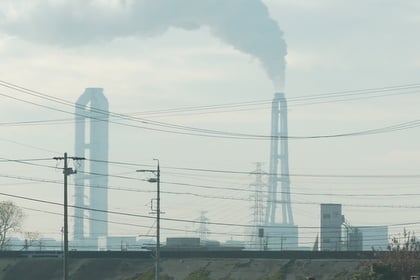
How about this picture of one of your eleven gas-fired power station? What was the expression... "no smoke without fire"...

I know Chubu Electric has 17 hydroelectric, and there is one nuclear power station that is having a rest at the moment. But according to this document from 2010, the gas-fired have a total rating of 23,900 megawatts, the hydro electric 5,300 MW and the nuclear 3,500 MW. They have a "new energy" 新エネルギー powerplant at Omaezaki, which produces 6 MW. That's 
Gas: 73%
Hydro electric: 17%
Nuclear: 11%
"new energy": 0.02%

I'm trying to work out exactly what the Omaezaki "new energy" plant is. Usually Google takes me to the Hamaoka nuclear power plant, which is, perhaps by some bizarre coincidence, in Omaezaki. The "new energy" hall is part of the visitors' centre at Hamaoka. There seems to be a 2.2 MW wind farm, turbines standing proud along the windswept beach. Perhaps used more as a kind of garnish next to Hamaoka, in much the same way that someone on a diet orders a salad and a diet coke, to go with the steak and chips. 

But it's easy to criticise. Putting into perspective this 6 MWatt "New Energy" plant, relating to 0.02% of their total capacity, my solar roof will have 9.12 KWatts, roughly 650 times smaller. This is the biggest rooftop array that the panel fitters had ever made. Most are around 4 or 5, less than one thousandth of the "New Energy" plant, which in turn is less than one five thousandth of Chubu electric's total capacity. 

A lot of their capacity is to meet peak demand. The gas and nuclear power stations are either on or off, so they need some way of storing extra energy when it is not being used, and supply it when it is needed, and hydro electric works well at this. 

They are also working on the hundred-year-old system of massive power production and long distance power transmission. This goes back to the  war of the currents between Edison and Telsa in the 1880s. Ultimately won by Telsa and Westinghouse. 

Other people in Japan are talking about smart grids, where electricity is generated on a smaller scale, and used or stored in a more dynamic way to reduce consumption.  If Chubu Electric doesn't start thinking about this, it's likely to see people switching off from the grid in a few years when solar panels have halved in price again, and batteries have become cheaper and more efficient. 

Tuesday, 12 July 2011

Compriband - Magical tape


For a house to have good thermal performance, you need insulation and airtightness. A company called Wuerth provides a magical component called Compriband, which we are using to seal our windows.

Regular Japanese window frames are the antithesis of this as the aluminium is a great conductor. Also, sliding windows, while great at saving space, defy airtightness. This is just looking at the window moving within the window frame; there must also be no gap between the frame and the house, and whatever is filling that gap should insulate.

The problem is what to do with this gap between the window frame and the house, and German manufacturers Weurth have come up with a tape called Compriband, which can be fitted around the window before it is installed, and it then expands after installation to fill the gap with foam and provide an airtight membrane on the inside.

The tape is passed around the whole window frame. It should be cut diagonally at the join, to ensure the seal. Also, at each corner, there needs to be some extra length.

Getting into the corners

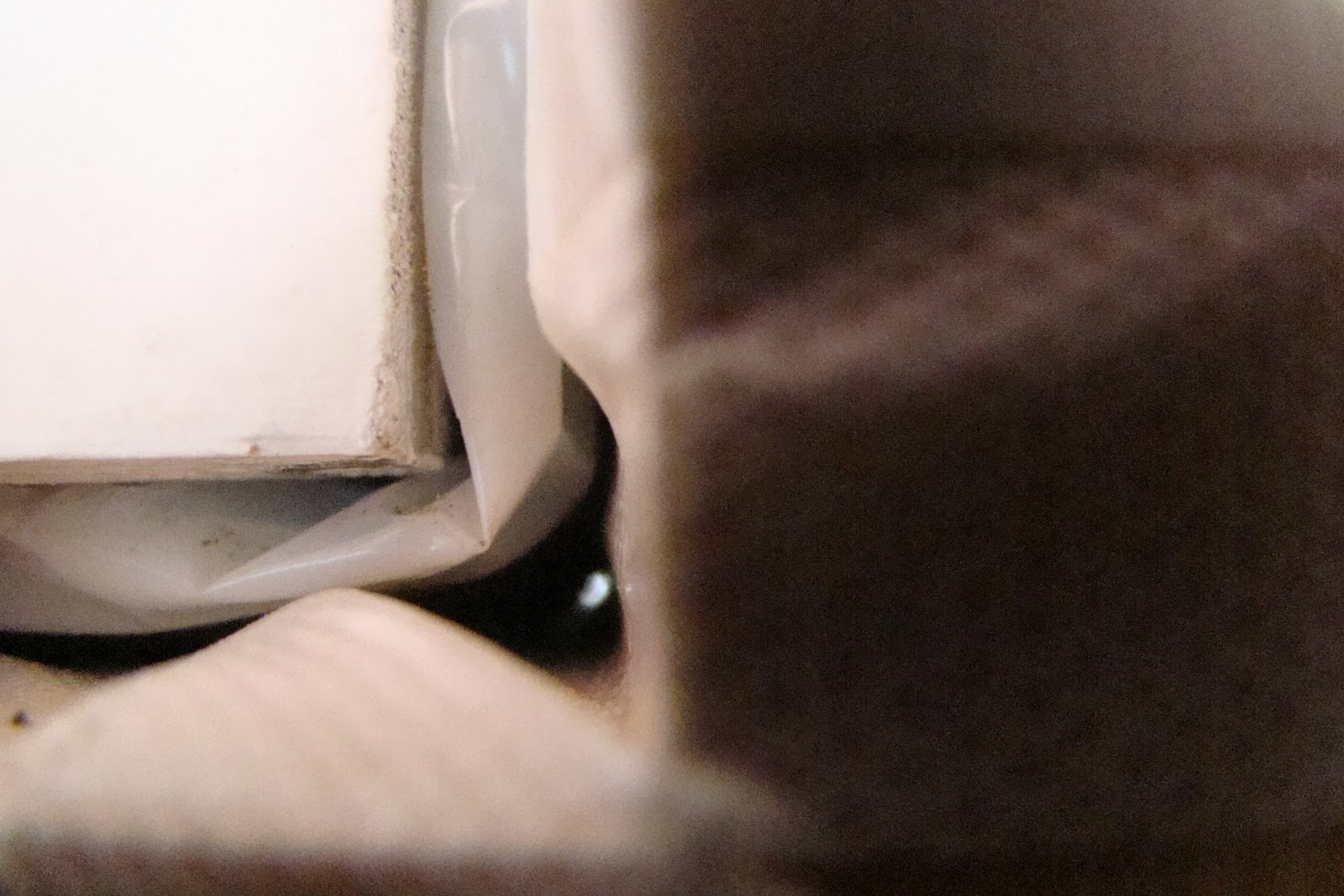
One piece of advice the manager of Pazen gave to me was to look into the corners. When the Compriband tape is applied, each corner needs a little extra length, so that the tape can expand to fill the corner, and the insulation is complete and the airtightness maintained. The picture above is what the corners should look like, with the Compriband filling the gap. In one case, it looks like no extra length was given at the corner.


In another case, although it looks like extra length was given, there is some daylight visible at the corner, so the Compriband has not filled its gap.

You can follow Wuerth Japan's blog here
And see a range of their products from their Japanese website here.