Showing posts with label LED. Show all posts

Friday, 14 April 2017

Sweeping generalisations about cultural differences in lighting


A lot of western developments in light fitting design have been going on in Halogens. Compact, low voltage LEDs can now slip neatly into some Halogen fittings. Halogen bulbs are smaller and of lower voltage, but not much more efficient than incandescents. They have never really taken off in Japan, and especially not in domestic application, where more efficient fluorescents have been standard since the 1970s. Many foreigners have been taken aback when they first visit a Japanese house and see the kind of lights that would only appear in shops and offices in the west.

There is an interesting article here on i news about new lighting technology.

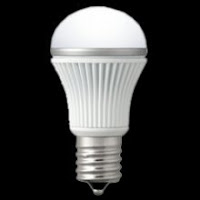
I've been keenly watching the development of LEDs for domestic lighting over the last few years, but most of what I have seen is the production of LEDs in conventional light bulb packages. 

Early in the development of incandescent lighting, a conscious decision was made to limit the lifetime of the light bulbs, in order that new bulbs could be sold. Hence the invention of lightbulb fittings, and replaceable lightbulbs. In many cases for LED lights, the life expectancy is as long as the building, or at least as long as the furnishings, so there is no need for a replaceable LED. 

To have a replaceable LED light bulb would be like using a typewriter keyboard for a computer. This would be ridiculous because the QWERTY typewriter keyboard layout was designed to slow down the typist and stop mechanical keys jamming. Wait a minute, we do use typewriter keyboards for computers!

Moral of the story: packaging is of much higher priority than performance. 

Wednesday, 19 October 2016

LED innovations


Usually I opt out of the vendor's email lists when I buy stuff online, but for some reason I didn't for Beamtec, the shop I bought our house LEDs from.

I get really annoyed with advertisements for things I have already bought, or hotels in places I've just come back from, so it was a bit stupid to subscribe to the website where I bought LEDs for my house, most of which proudly announce that they will last for tens of thousands of hours. 

One advantage is that I have been aware of the prices of LEDs, and have a record of their downward trends over the past few years. 

I have replaced one light so far: a compact fluorescent built into the kitchen hood, which blew after a rather pathetic four years. 

there are other fluorescent lights I'd like to change if I can. I'd like to replace the strip light above the upstairs wash basin. We got the washbasin as a unit with cupboards and drawers below, mirrored cupboards above and a 20 watt fluorescent strip light along the top. 

I've been looking at the prices of LED replacement strip lights, wondering at what point it's worth switching from the fluorescent tube that still works. 

They were around
2,200 yen in December 2012
1,600 yen in May 2013
1000 yen in June 2015
700 yen in September 2016

Interestingly they boast a 300-degree radiation compared to the conventional LED strip light's paltry 180 degrees. In fact in most applications fluorescent tubes are mounted on walls or ceilings, so half of the light is going into the wall, and you only need 180 degrees, but looking at the picture, and with the knowledge that the LED inside the tube is mostly sending light out perpendicularly, the larger translucent area of the tube makes some kind of sense. 


Sending light in all directions is actually a weakness of fluorescent tubes, and not something they need to go out of their way to remedy. Anyway, here are some more ideas of retro-features that they may add to fluorescent tube replacements. 

  • Why not add a circuit to LED lights to make them flicker on and off a bit when you switch them on. After all, do we really want a light that comes straight on when we turn on the switch?  
  • How about adding a radiant heater to the LED bulb so that it will emit heat, just like an incandescent light. 
  • Or why not change the spectrum of the light to add frequencies that are invisible to us but that will attract more insects. 

Wednesday, 21 May 2014

The best LED I've ever bought

With its bright light, spidery legs, magnet and sensor, the Ritex Dokodemo portable LED light is probably the best LED I've ever bought. And I've bought quite a few LED lights over the past few years. A lot of them have been completely rubbish. 

I got a battery powered device with three LEDs spaced a few centimetres apart in a row and a magnet on the back that would fit onto the front of the fridge. 

The magnet worked.

Unless you tried to use it to hold something else onto the fridge.

And there was an E17 light that looked pretty promising to replace the incandescent bulb in a table lamp. It had several LEDs in reflective holes that would point light where you wanted it. But it was made of cheap plastic, incapable of conducting the amount of heat away from the LEDs that they would have produced if they'd put out a decent amount of light. 

They did not. Somebody in the design department had not considered that. 

The best lights I'd got so far were bedside lights with single high-power LEDs. Nice heavy bases and plenty of luminous power. 

I saw the Ritex docodemo in a hardware shop and decided it would work well under the stairs. 

Instead of wiring in a light there, from the start the plan was to plug a sensor light into a socket high up on the wall in there. Plug-in sensor lights have been around for a while, and recently they have been LEDs. But they don't put out a lot of light. They are probably OK in a corridor or on stairs so you can see where you're going, but if you're in a store room trying to find something they don't really do their job. 

The Ritex has been keeping it light under the stairs when necessary. It is battery powered and the batteries ran out once, but that was when someone had left it switched on, rather than on sensor mode, since the previous day, and it was starting to dim.

I took it camping with us last weekend, and realised there what a great light it was. 

It was in the area of camping that LEDs made their first big commercial success in delivering light rather than just vaguely letting you know that light was there, as they had been doing since the 1970s when they appeared on electronic panels and then in the seminal digital watch that would come on for a few seconds to show you the time in red. LED head-torches have been around for a while, where their reliability, long life, low power and light weight make any extra cost worth paying. 

We've got a decent collection of LED head torches, but have still been adding unideal candidates to our gallery of camp lights. 

Before it got dark, I lined three of them up along the rope above the table that was going to hold up the tarp covering it. One of the lights gets about seven out of ten on my scale of satisfaction. It's a small puck light with a hook on the back, three AAAs inside and not a bad amount of light, although it seems to take a little while to warm up. It works well hanging from the middle of a tent, and is better than nothing above a table, although it doesn't really give out enough. 

Next to it I put our wind-up LED tilley lamp. This gets about six out of ten. The good point with it is the handle on top so you can charge it when it starts getting dim. It can also be charged from the mains or from a car. The big problem is that it's trying to be a tilley lamp, so instead of sending the light down, where you need it, it sends it around in all directions, which may be useful if you're pretending to be a lighthouse, but is not much use otherwise. And if you were going to be a lighthouse you wouldn't be that bright. 

Next to these I hung the Ritex, and when I turned it on, the other two immediately became parodies of themselves. The puck light is smaller and we'll probably bring it with us, but I think the LED tilley lamp will be staying at home for our next trip. One issue with camping lights is that you don't want things to be too bright when you're camping. Being under the stars is great, but you have to be able to see them. Since this is a sensor light, it will go off if nobody moves for a while, so when you're sitting back you can enjoy the night, but when you need to see what you're doing it will help you out. 

So under the stairs it works perfectly. On the campsite it works perfectly. I haven't had cause to try it out in the event of a power cut, or use it for illumination when I'm working outside at night, but I'm confident it will perform wonderfully in these situations too. 

It's so good, in fact, that I'm going to get another one, or perhaps two. The only problem is that they now offer an updated version, on which you can adjust the colours, and I have to decide whether that's worth the extra 500 yen. I think it probably is. 


Wednesday, 28 August 2013

Nanogeneration camping: A tealight-powered LED lantern

When we go camping we often meet Paul from Fireside. He imports wood-burning stoves and deals with a lot of outdoor stuff, and always has interesting camping tackle. People send him samples that he likes to try out in the field before unleashing them on his customers. A couple of years ago he had a twig burner with a thermocouple that could charge a phone. He seemed to be spending most of the time feeding twigs to the burner, and drinking a lot of tea from the kettle on top. I didn't notice him bringing this bit of tackle the next time we saw him.
This year he had a tea-light LED lamp. Somebody is raving about it here in the Chronicle Herald. That's a Canadian publication so it may be Chronic le Herald and I'm misreading the URL.
It uses a thermocouple to convert the heat from the tea light into electricity, which drives eight LEDs. It certainly is bright. The LEDs are something like 20 times brighter than the candle. The problems with a lot of LED camping lights are that they don't put enough light out, and the light is going in the wrong direction. The Tilly lamp makes a lot of sense if you have to carry around a light source with liquid fuel, but designing LED lights in that shape seems a little strange. On a campsite you don't really want the light shining out in all directions. You often want it pointing down at the table you're eating from, or the surface you're working on. This light is both bright and allows the light to point down towards the table.
And it only uses candles. This is really good because candles are cheap and easy to carry. They don't go off, and it's easy to see how much of them is left, unlike batteries. And of course they are made from fossil fuels. That's not necessarily a good thing. Also, for the weight, size and cost of the lantern, you should be able to get a high-powered battery LED, several rechargeable batteries and a charger for them. You probably have a battery charger anyway. LED technology is still fairly young, and there are still plenty of models with excessively long battery life and inadequate brightness. The good news is that if you leave them on they'll still be shining a couple of days later, but that bad news is that you may not notice. This lantern goes out when the candle burns out.
It provides a wonderful lesson in energy efficiency. Thermocouples have an efficiency of something under 10%. Let's say 5% for easy calculation, so they're turning one twentieth of the heat they use into electricity. Then LEDs, while really efficient compared to other lighting sources, only turn about 10% of the electrical power that reaches them into light. So the combination of the thermocouple and LEDs is only only getting one two-hundredth of the power into light. And this electric light is twenty times brighter than the candle was, so the candle is turning less than a four-thousandth of the energy in the wax into light. A few times less, in fact, since a lot of the heat from the candle is not even going to get to the thermocouple.

So how much better is this than if the fossil fuels, instead of being sent to the candle factory, were sent to a power station, then to your house, and into a rechargeable battery?

Wednesday, 17 April 2013

Sensor lights

One of the problems we came up with in the one-year evaluation was the light in the under-floor store room.

We put a regular ceiling light with a sensor on it, and the problem is that you have to crawl into the middle of the room for it to switch on, since the ceiling is only about 1.4 metres high so the cone of the sensor's sensitivity doesn't spread very wide. My idea of a solution was to move it closer to the door, which should be relatively straightforward.

Their first suggestion was just to put a light switch on it. Since this is a fluorescent tube and it's in a store room, where it could be left on for a day or two, this seems a pretty good place for a sensor.
That night when I put the kids to bed, I noticed that the light was still on in the machine room, where we had been during the visit. This is one of the few places we have a light switch and if the door had been closed, it would have been on for the rest of the month, until next time to clean the filters.
Another option is fitting an external sensor to the light, to switch it on. A further complication with the room is that it has two entrances, around 3 metres apart, so it would be tricky to get one sensor sensing activity in both places. There are sensors for yard lights that react to movement up to 10 metres away, so this should be possible.

The sensor itself sticks down in the middle of the light, which is round with a round fluorescent tube inside. It's not designed to be adjusted, as are most of the other sensors I bought, but I do have a screwdriver.

I was sure to switch off the lights at the breaker when I was doing this. Any kids reading, get a grown-up to help you do this as you might fall off the stool trying to reach the master switches.
The sensor assembly could easily be disassembled from the bracket and the wire was stiff enough to hold it pointing in any direction, so the first thing I tried was putting the plastic cover over it, to see if the sensor could see through it.

At first this seemed successful. After I put the breaker back on, with the lighting-up duration set to the minimum of 5 seconds, when the kids went in from the kitchen the light went on, then they waited for it to go off and went in from the living room and it went on, then they didn't move and it went on again, then they got as far away from the room as possible and it went on again, then again just after it switched off 5 seconds later. Then again, and again regardless of any human activity.
I guessed that the lights were heating up the inside of the cover when they were on, then the parts inside the cover would cool rapidly, which the sensor registered as a movement of heat, therefore switching it off again. So I took the cover off, and it seems to be better. I toyed with making a bigger hole in the cover, but for the moment it's just there with the cover off, working relatively well.

Friday, 14 December 2012

New LED strip light

I just saw this for 2,180 yen. Is it a no-brainer to buy, or would I be another sucker?


We have four fluorescent lights in the house. Fluorescent tubes are cheaper to buy than LEDs for the moment, although they use more electricity and don't last as long. We used fluorescent tubes in three store rooms in the house. We seldom use these, perhaps once or twice a month for the ones upstairs, so the electricity usage is tiny, and the difference in lifetime is insignificant. The underfloor storage is more marginal as we use this more. 

The other fluorescent tube was ready-installed in the bathroom sink and mirror unit. This is used a few times every day and is often left on. There are four advantages to switching it to LED: Lower electricity costs, no need for replacement, instant switch on, and less heat in the summer. 

In terms of electricity usage, we're comparing 9 watts for the LED with 20 watts for a 20-watt fluorescent tube. If we use it for two hours a day, which may be a bit generous, the difference will be around 600 Watt hours per month. At an average 20 yen per kWh, that's around 12 yen per month. Those yens are certainly going to add up, but will take almost 7 years to reach 1000 yen. In a living room or kitchen, and more so in shops or offices, the payback in electricity cost is going to be much shorter. 

I always scratch my head in wonder when I go to the local electrical appliance shop and see the LEDs being promoted and on offer, but looking up at the ceiling there is row upon row of fluorescent tube. Perhaps they get a special deal from the electricity company as they do so much to boost their business!

In terms of replacement, I can pick up a regular 20 Watt tube for around 100 yen, which, relative to the price of the LED is free. The lifetime of an LED is not twenty times longer. Even if it were, the lifetime of the fluorescent tube is still going to be a few years. They are rated with a lifetime of around 9,000 hours. This is 10 times longer than incandescent bulbs, so switching from incandescent to fluorescent is a no-brainer. LEDs are about five times longer again. In the case of our house, the fluorescent tube should last over ten years. That's a theoretical figure, but one practical bit of evidence is a house my parents built twenty years ago, which used all compact fluorescents. It was eight years before they had to change a bulb.

So after a couple of replacements, LEDs are likely to be cheaper than fluorescent tubes as the economics of their inherently lower resource use take over. So in terms of replacement, getting the LED and replacing it now is going to save perhaps a couple of hundred yen in ten years time. Of course, in ten years, fluorescent tubes may have been banned and there may be no choice, since another issue is the pollution from the production and disposal of the fluorescent tube. 

If I had the choice of buying a fluorescent tube or an LED tube for this, then I would go for the LED. This is not really a direct financial cost in my pocket now, but a more general trend of picking the pocket of the planet, and increasing the problems and shortages that our children and grand children will face. Having said this, LEDs are not made out of sunshine and rainwater, and have their own range of dirtily-mined precious metals and toxic chemicals, but there are undoubtedly going to be less of them. The choice is whether to carry on using a tube I already have, or replacing it.

The instant switch on is not a major issue as everyone has lived in Japan for quite a while and is used to that flicker. The summer heat is also marginal. It's brighter in the summer so we use it less, and it is only putting out an extra 10 watts. 

So, for now there is no need to spend 2,000 yen. When the bulb goes, it's going to be sensible to replace it with an LED. Until then, or unless LED-style tubes get to be much cheaper, or threaten going off the market as everyone is installing LED light units, I can put away my wallet. 

Sunday, 30 October 2011

I have seen the light

After forty days and forty nights in the wilderness, wandering from website to website, wondering about the complexities of electronic lighting and winding up at least one sales rep on the way, the system worked!

Through the ingenuity of our electrician, making a test bed using two wires tied to a step ladder at one end, and a couple of nails on the wall at the other end, we were able to test the parts: the tension wire fittings, bought from the UK, made in Germany; the light bulbs, bought from the US, made in China; the power supply, bought in Japan, also made in China; the LED driver, bought in Japan, and probably made here. The parts were no doubt from Taiwan though. 

I had three worries about the system not working. One was that it would not work at all. Another was that there would be no dimming, and the elaborate current variation system would ultimately only give us an on-off switch. The third was that we would get dimming, but there would also be flickering as the different frequencies of the power supply, current control circuit and the electronics within the bulbs would cause beats and interference patterns. Another minor worry was that the bulbs would not produce even light, so one bulb would be at full brightness with another dimmer. 

In fact, we got bright, clear and even light from the three bulbs, which dimmed obediently as we turned down the volume. Unfortunately, the current control circuit we used will only dim to 50%. AudioQ have completely dimmable circuits, but only to lower currents: 0-350 mA, 0-550 mA, 0-700 mA and 0-1000 mA. These lower-current circuit boards are open, rather than in a box, which causes my electrician to pull excruciated faces.  Anyway, for three bulbs at full whack, we need 1500 mA, (12 Volts, 6 Watts), so 1000 mA is probably not enough. We chose their 1400 mA supply, which will only dim to 50%. In practice, dimming to 50% is probably good enough, although it's tempting to twist the electricians arm and get a 0-1000 mA dimmer circuit for the other three lights, which will effectively give us dimming from 30% to 100%, or brightness from 0 to 70%, in the other circuit. Now that the wires are in parallel, we could add extra bulbs, and for example have two bulbs on one light circuit and four on the other. The four bulbs wouldn't give any more light overall than than three, but would be able to spread it out more. 

The test took place in daytime, and the three lights certainly seemed bright enough, although it's impossible to give any idea of the brightness through a picture.  It's also difficult to be sure exactly how bright the lights will be when they are in place, and whether 70% of that really would be enough.

Tuesday, 18 October 2011

Please help me, I know too much

It would be so much easier if I'd just believed it when I heard it was impossible to dim LEDs.

Apparently when motor cars first came out, they had to have someone walking in front with a red flag.

I'm sure in a few years, it will be really easy to get cheap LED lights that work. 

Maybe this whole process has been filled with too many obstacles to sense and reason, and maybe the science is all just too difficult. It's also very likely that I'm going out of my way to make things complicated.

In the meantime, I have to take solace in Einstein's words.

"There are only two things that are infinite," he said, "the universe, and human stupidity." 

Then he added: "And I'm not sure about the universe." 

Sunday, 9 October 2011

Buying lights

Just spent about 300,000 yen on lights and fittings for the house. It took most of my Sunday morning.

It seemed like a good idea to get these directly for three reasons. Mainly, getting light fittings straight from the internet saves money. The builders charge at least 80% of the list price, passed on from the electricians. You can usually get lights for about 40% of list price on the internet. So this should have saved a fair bit. There is probably some hidden cost somewhere, and the electricians may charge extortionate corkage.

I used kakaku.com, which is a site for finding mostly electrical goods. This usually took me to a merchant on Rakuten.com, which is a large online shopping site, the Amazon of the East. I also searched directly on Rakuten. 

The process of choosing lights was a labourious one. Different manufacturers have huge numbers of subtly different products. One of the big electrical manufacturers in Japan brought out 120 new LED fittings in April. 

The main numbers that can be compared are wattage, lumens, CRI, angle of beam and price. They seem to be getting better, but in some cases, some of the figures were missing for some manufacturers.  Of course design is also an issue, especially for brackets and spots, but for down lights there's not much to chose from.

We want lights that will come on and switch off automatically in seven places around the house: the entrance, the kitchen, the utility room, the bottom part of the staircase, the top part of the staircase and the two toilets. In terms of design we wanted single fittings that included a light and a sensor, but at first these were not available with LED fittings, and we needed separate sensors to the lights. Since then, Koizumi brought out single-fitting light sensors, which came out a little cheaper than buying lights and sensors separately, and superior in terms of installation and design.

All of these decisions went into drawing up the list of fittings over the past six months, with a lot of help from the architect who found a lot of them. I had been talking about LEDs for the previous 18 months, mostly to derision,as I mentioned before. There are many calculations showing that it's not worth switching to LED, but those are mostly out of date already, and if not will be very soon.

The revolution in lighting design, heralded on Panasonic's webpages with their snippets of useful information, does not yet seem to have brought many revolutionary products, although it's early days.

I decided to stick to the lights we'd chosen on the list we talked to the electrician about at the end of August. I'm sure in the interim some better ones have come out. Some of the prices had dropped since then. 

I managed to find almost all the lights from one merchant, Prizuma, which had the cheapest every time. Things were going well until I hit the "next" button with my full shopping cart, and went onto the instructions to pay. No space to enter credit cards. Bank transfers or cash-on-delivery only.

Another reason for getting the lights myself, rather than putting them into the builder's invoice, was that I can pay for them with a credit card. Part of the financing, unfortunately, is coming from sterling. At the moment, the value of sterling seems to be falling in the same direction at the cost of LEDs is, but that is another story, that I shall tell sooner or later, with great pain.

One way of getting sterling into yen is to buy things on a UK bank credit card. The credit card companies charge something for the exchange, although it's often less than the banks charge, and there is no transfer fee. 

So, having spent the whole morning getting all the LEDs lined up into the order for Prizuma, to no avail, I had to go back to Rakuten and find other merchants who would take credit cards. This didn't take as long, now that all the lights were decided.

That was not the end of the story, as Rakuten still had my old credit card on their records, which expired last January.  

Buying things online has got a little easier in recent years, with auto fill in functions and websites that will remember data you entered on their forms. I remember my first experiences having to completely re-enter several pages of forms, several times, for example for missing out a hyphen from the middle of a telephone number. I also remember having problems on Japanese sites with my name, as it did not contain any Chinese characters, which the field required. 

When I went back to try to correct the credit card expiry date, I noticed some recommended purchases, which Rakuten bases on what I've been buying, in much the same way that Amazon does. The number one recommendation was medicated scalp-d shampoo for oily hair. Something surely wrong with their algorithm.

I sent the new card details in, but since got a message that the payment had been refused, so I had to call my bank in the UK and ask them very nicely to let me use my money. They quite often query payments made in Japan, even though I've lived here for over a decade.

The lights should all arrive in the next couple of days, which will be exciting!  


Friday, 7 October 2011

Low-voltage tension cables. Back to parallel not series

The electrician has been correspondeding with Nayuta, manufacturers of constant current power supplies, and they had the perfect model, with the right voltage and the right range of currents that could be varied. The problem was, they did not know how to vary the current. The power supply has a screwdriver trimmer wheel on it, and there are terminals to connect something to vary the current, but they do not have the something, nor could they, or the electrician, find one. If you can understand that, please explain it to me, because it does not make sense.

I also found some power supplies from AudioQ (Japanese only), with volume controls, which looked promising. They put out up to 350 milliamps, which should be about right for a 12 volt, 4 watt bulb, between 2 and 26 volts.

We want 3 bulbs on one circuit, which at first I thought would be no problem--they would just not come on at full brightness. Then I remembered the VI curve for LEDs and that the D is for diode. If there is much less than 12 volts going through each LED, or 36 volts total, then they will not come on at all, however many amps are available.

So this would only work if we had two bulbs on each circuit. Also, the electrician seemed much happier with something in a box, rather than having to install a bare circuit into the wall.

There is another nagging worry though. Even if the current could be adjusted, and the voltage kept at suitably high, would the bulbs actually respond properly, or would their circuits mess things up?

I'm sure the parts must be out there somewhere, but after a few months of searching we haven't been able to find them, so it's time to go to plan B, which is to use a standard voltage dimmer switch, get LED bulbs that work with dimmer switches and hope for the best. The danger with this is incompatibility between dimmer and bulbs, leading to flickering. As there are three bulbs, one of them may flicker at any level, and we'd be left with an elaborate on/off switch. 

I'm about to order some lumilux fully dimmable LEDs from EarthLED, which apparently work with magnetic transformers and dimmer switches. These seem to be available, although the electrician's first suggestion was a switching power supply and a pulse wave modulation (PWM) dimmer switch. As each of these, and no doubt the controller within the dimmable LEDs, are electronic circuits, each with their own frequencies, the chances of interference, harmonics or beats is quite high.

Not at all relevant, but  here's another constant current, non-variable, power supply.

Monday, 3 October 2011

Dimmable bulbs

I visited Hisashi's bar, Oread, in Tatsuno the other day, and he was saying he wanted to change his lights to LEDs, but had been told it was impossible. He puts on live music in his bar and would like to use LEDs for his stage lights, and adjust them with the row of dimmer switches.

So, if all you need to do to dim an LED is change the current, then why would any LED NOT be dimmable?

The problem is that whenever an LED is packaged into a bulb or fitting, some electronics are added. This is essential to put a cap on the current or voltage and stop a melt down. So the question is whether the bulb has a one-size only approach, and will only send a specific current through the LEDs, or whether it has a cap, and will allow any current to go through, as long as it is no more than the limit.

If the electronics will only send the designated current, then all bets are off regarding dimming. If there is not enough power going into the light, the required voltage will not be reached and no current will flow. LEDs may not obey Ohm's law, but they do obey P = V I. The power will always be the product of the voltage and current. This is sometimes erroneously referred to as Watt's law, but Watt actually had nothing to do with electricity, and the unit we use for electricity was given his name posthumously. P = V I is actually a Joule's law, or a combination of P = I2 R with Ohm's law, V = I R. Back to the LEDs with fixed current internal power supplies, either there will be enough power, and the voltage will be high enough for the full current to flow, or there will not be enough, and no voltage will flow. However fancy the dimmer circuitry on the outside is, dimming won't happen.

If, on the other hand, the electronics put a limit on the current and will only allow current to flow below the meltdown level, then we're in with a chance.

Anyway, there are plenty of dimmable LEDs, in the sense of dimming with a conventional dimmer. Here's one from the US:

I'm only really looking at MR16 GU5.3 bulbs at the moment. These are low-voltage halogen types that I need for the tension wire system.

I got some E17 bulbs for around eight or nine hundred yen to play around with and try out in various appliances we already have. On the bulb instructions, it said we should not, under any circumstances, use the bulb in a fitting with a dimmer, so we tried it in a desk light with a dimmer. Nothing really exciting happened.

As we turned the switch up, first of all, nothing at all happened. Then the light came on, flickering very quickly, almost too quickly to notice, a little below full brightness, then it flashed in one pattern, then flashed in another fashion, then came on at full brightness. What seemed to be happening is that the dimmer on the desk light was interfering with the circuit inside the bulb.

Sharp have a regular lightbulb-like LED, left, which will apparently change brightness.

This site from KC Lightech  also boasts dimming LEDs, in GU5.3. It looks like Cree LEDs inside. They recommend a Panasonic power supply. I wasn't sure how I could actually buy them so I called. They have no stock and will ship an order of a hundred. I only want six!


There is a Philips light here for 6,384 yen a throw, 10W, which can dim, depending on the power supply. They don't always work, but do with Maxray, Daiko, Endo and Koizumi.

This 5.5 W light from Decolight is only 1,200 yen. although it doesn't mention which power supplies it will work with, and careful inspection reveals that it is 100 volts AC. And I thought MR16 GU5.3 was a 12 volt DV size.


Friday, 16 September 2011

What about the low tension cable lighting then?

So the fundamental problem with tension cable lighting systems for LEDs is that they are in parallel, as we saw in this post. At least they are if you just have two wires. It is possible to run them in series if you use four wires. Like this. 

This is looking down from above, the space on the right is above the dining table, there is a beam in the middle, and the space on the left is above the living area. The wires are in blue, held onto beams and walls by the T-shaped supporters and tensioners. The Qs are lights and the Xs are isolators. 

In a way this is more flexible than having two wires, as you could have the three lights lined up perpendicular to the wires. Of course you can't have the three lights strictly in a row going the other way.

And in fact, it's possible to run them with only three wires, as long as you use an isolator. 

In fact, it's possible to run tension cables in series with only two wires. 

Wednesday, 14 September 2011

Low voltage tension cable lights

In terms of lighting, one of the most challenging areas in our house is above the dining table. Especially with open-planned rooms, you often see that the original position of the light fittings above the dining table differ from the ultimate position of the table itself, and we'd like to avoid this with some built-in flexibility. Adding to this problem, the area we are likely to put the table has no ceiling above it.

So the best solution seems to be cable lighting. Low-voltage cable lighting is originally a halogen application where two wires are strung across a space, and bulbs are hung between the two wires. Because the voltage is low, bare metal can connect the bulb to the wires allowing for minimalist design. Here's a site from the UK, and here's one from the US that sell such systems. The US site has a couple of LED systems, and the UK site says that LED bulbs can be fitted instead of halogens, but from email correspondence with them, it sounds like they have had some problems installing these, and don't recommend using a dimmer.

There is a potential technical problem with low-voltage cables though, and another fundamental difference between LEDs and incandenscents that takes a bit of work to get the head around. The basic problem seems to be that LEDs are semiconductors. This puts them in the realm of electronics, and beyond Ohm's law and the traditional domain of electricians.

Wire and light bulbs conduct electricity, and conduct more current the higher the voltage is, following Ohm's law: V = IR, where V is voltage, I is current and R is the resistance. If we use the analogy of water as electricity, which sometimes works, we can visualise current and voltage by thinking about a waterfall. The height of the waterfall represents the voltage; the width the current. The power is a combination of the height and width, so you could have a very low, wide waterfall or a very high, very thin waterfall and both would have the same power. In mathematical terms, this is P = VI, where P is power, V is voltage and I is current. In an IV curve, which is a straight line when we're following Ohm's law, the power is the area underneath. Incandescent bulbs basically work as resistors, so the more voltage there is, the more current goes through. Usually, power supplies have fixed voltage, and incandescent lights will draw the appropriate current depending on the voltage. Give 240 volts to a 60 watt bulb and it will draw 0.25 Amps. Divide the voltage by the current and it must have a resistance of 960 ohms. Put 120 volts through this and you'll get half the current and a quarter of the power.

Semiconductors sometimes conduct and sometimes don't. Diodes will conduct one way but not the other, transistors will conduct from one place to another if you apply a voltage in the middle. If we use the analogy of water as electricity again semiconductors are like taps or valves.

The other thing we'd like in our system is a dimmer. For conventional lights, dimmers work by changing the voltage. Because the lights follow Ohm's law, more voltage means more current, and they will give out more power. Because LEDs don't follow Ohm's law, changing the voltage is going to result in no light at all for a long time, then variable light if you tune it very finely, and then the LED will start melting as there is too much voltage and too much power. Slight differences between bulbs could mean that the voltage at which one LED has not come on yet is the same as the voltage at which another LED is at full brightness. If LEDs are in parallel, the difference could mean that one LED comes on and draws all the current while the others are still off. Putting LEDs in parallel is widely held to be a bad idea. For conventional bulbs, any difference will just mean a slightly different angle of the Ohm's law line, and a slight difference in power. Putting conventional bulbs in series is a bad idea as one of them could blow at any moment, and will stop the whole lot from working. This is also true for LEDs in series, but with lifetimes of tens of thousands of hours, the problem is several years in the future, even if the lights are on the whole time.

Fundamentally, all LEDs are dimmable. If they get less power, they will put out less light. The difference is that they can only be dimmed by changing the current. Although fixed voltage power supplies have been standard for the past century and a half of electrical appliance design, power supplies that put out a constant current are also available, and in many of these the current can be varied. Here is a 2cm chip with a dimmer that will send fixed current between 70 and 350mA. In terms of parts there is a lot of stuff out there. Manufacturers are busily putting LEDs into light fittings designed for an electrical system that Edison would mostly recognise, and each fitting has an LED driver, which is basically regulating the current. The problem for us is finding the right products. To the left is a 2 x 2 cm circuit that will do the job. Here's an LED dimmer for 780 yen, . Here's a remote control dimmer for 1,980 yen.

And here's someone else lamenting ignorance about how LEDs actually work:

Monday, 12 September 2011

LED bulbs for torches

In my extensive peregrinations around the Wired Weird World looking for answers to the puzzles that LED lighting present, I came across a website selling LED torch light bulbs for 190 yen apiece. Never wise enough to resist wasting money on a bargain, I put in an order for four of these. Two rated at 3-5 volts and two at 4.5. I've now opened two of them, and one is a little brighter than the other, but they are identical so I'm not sure which one was which.

The immediate use is a series of battery-powered camping lamps that are in that grey area between the store room and the dustbin. LEDs for camping is an obvious choice, especially if you have small children, who are likely to switch the light on as soon as it gets slightly dark, and leave it somewhere until the morning. A conventional bulb will leave the batteries flat in no time. Since we started using LEDs for camping, we found that the batteries were still working when we got out the camping gear the following year. Another advantage of LEDs when camping is that they don't attract insects. 

So, rather than throwing away the old camping lamps, replacing the bulbs with LEDs seemed like a sensible option. This is no doubt a false economy, but there it is. 

We have three old-style lamps, with a handle that turns into a stand and allows the lamp to point in any direction. Two were large and one was a miniature version, that takes double-A batteries. The only batteries I had were double A's, so that was the one to be tested. I think this was a Thursday morning, but work seemed much less important than trying out these new devices.

The bulb fit the torch well enough, and the light came on. I had checked the diameter, and it was an E10. The 10 means 10mm, and I'm not sure what the E means, but I also got some E17s for some small table lamps and clip-on spots, and may get some E27s, which are standard-sized bulbs. They all screw in, which is where things started to screw up.

The problem was the lack of a flange at the top of the metal part of the bulb. The torch was designed for a bulb with no thread, but a flange at the top. This was held into place by a metal ring that screwed onto the plastic bulb holder, and so kept the bulb in place. I decided a slight modification was in order.

If I bent the metal strip that made the connection to the outer terminal, I thought, that could work on the bulb thread, and keep it in place! Just a little bend one way, then another, and it's sure to hold it in place.

It worked a little, or at least it seemed like it would work if I could bend it the right way. So I tried adjusting it a little more, then a little more, and then the metal strip broke. 

The good news was that I now had a small L-shaped strip of metal. I could use this to locate the bulb in the holder, so that the metal ring would now keep it in place and I didn't need to worry about the thread. 

The bad news was that the terminal no longer reached the bulb, and the light wouldn't work.

No problem, I assured myself. I can fix that with a little bit of wire from the base of the terminal to the metal ring that is now holding the bulb in place. I got the finest gauge of wire I could find, and made the connections. It looked great, until I tried to switch it off.

The torch switched on and off by sending the bulb holder, with the bulb in it, up and down. This turned it into a spotlight, then a lamp, as the bulb moved up through the reflector. For my modifications of the bulb fitting, I had pushed the bulb holder up, and taken the batteries out to avoid dazzling and a short circuit. After I'd fixed the wire on, I tried to switch the bulb off. This pushed the bulb down into the torch, where a bit of the wire got caught on something, and the switch snapped.

So now the bulb works perfectly, except that it won't switch on.

I was a bit more successful with the other two lamps. I spent another 190 yen on adapters that you can put AA rechargables into, and turn them into big D-sized batteries. The kids can have one big torch each, leave it on for the whole night, and the only thing they can fight over is the colour. 

Monday, 29 August 2011

Lights in the bedroom

For a start, the main purpose of a bedroom is sleeping, so you have to wonder exactly what the light is for. We're going to get some bedside lights, so we can read before going to sleep. These can be fitted on, or beside, the bed. It seems foolish to permanently fit bedside lights as we may realise the bed is not in exactly the right place.

The room has a window very high on the north wall, so it should get plenty of light in the daytime. So the most likely situation in which we will really need lights is if we get up very early in the morning and need to choose which clothes to wear. There are a couple of built in wardrobes along the west wall, probably opposite where the bed will be along the east wall. The door comes in at the south east corner of the room and sliding doors along the north open into the walk-in closet. The a walk-in closet in the back has its own lights anyway, so even in the scenario of getting up really early, we may not need much light. 

The ceiling is diagonal, underneath the solar roof, but there is a horizontal part in the middle where a beam runs east-west, and a couple of ventilation ducts run alongside it. This seems like a good place to fit some lights. There are several options, below. In each
case, I'd like to choose LEDs, although in view of how little it seems this light will be used, I'm not entirely sure. In a very short time, I suspect fluorescents will look rather silly in a low-energy house.

1. A duct rail with spot lights on
2. Universal downlights that can point in different directions
3. A single, variable light in the middle of the ceiling
4. Regular downlights
5. Double LED spotlights
6. An LED strip light, running east west
7. Single LED spotlights

I started off thinking 1. The duct rail seems like a good idea, as you can move the lights back and forth and twist them around to illuminate what needs illuminating. They seem pretty expensive though, at least for LEDs. You have to get the rail, of course--5,000 yen for a 4m Toshiba rail--and any light fitting that is reasonably priced (under 2 or 3,000 yen) has "bulb not included". Maybe I'm being stupid, and I'm probably not being economical, but I have a problem with any fitting that is designed to exchange LEDs, in a country where the life expectancy of LEDs is longer than that of houses. There are, of course, some existing fittings that LED bulbs can be retrofitted into, but three lights is probably going to end up around 20,000 yen. There are some reasonable duct rail fittings for E26 bulbs, for under 2,000 yen, then with a bit of shopping around, it looks like there are LED bulbs to fit in them for 2 or 3,000 yen each for 5 or 6 watts, corresponding to a 50 or 60 watt incandescents. If the house is delayed much longer, the bulbs are likely to become even cheaper.

The architect's first plan had a row of down lights, two with universal joints to the west, to illuminate the wardrobes, and two fixed to the east. When I started looking at prices, I noticed how expensive the universal down lights were. The cheapest fixed downlight I could find with a built in LED was 3,650 yen. This was 5 watts, corresponding to a 40 watt incandescent, with a CRI of 70. For higher wattage and better colour referencing, they get more expensive. The cheapest with a universal joint was 8,620 yen. In terms of design, uniformity seems like a good idea, so if we need the lights on the west side to move around, then having a row of three of the same lights will look least offensive. Not that people are going to be spending much time looking at the ceiling. Three of these will come in over 20,000 yen.

So by the time we've made these allowances, we could just get one of the central ceiling lights that we're putting into the living room and the Japanese room downstairs. These follow the simplicity of a "traditional" Japanese ceiling light, that is stuck to the middle of
the ceiling, usually with a pull-cord dangling from it. They have two or three circular fluorescents, and a mini night light, so if you pull the cord it toggles between being on at full brightness with all the lights lit, to partially on, to just a night light. We have a couple in our house and converted them several years ago to being low-energy by taking out one of the circular fluorescents. Actually, we just didn't replace one of the tubes when it stopped working. It's still perfectly bright enough. Anyway, a year or so ago, I think Sharp brought out an LED ceiling light that looks like one of these ceiling lights, but is filled with
LEDs of different colours. It has no pull cord, instead sporting a remote control which can vary the brightness and the colour. They started retailing around 70,000 yen, and have been followed by other manufactures, and I've recently found a Toshiba light for 20,000 yen. The advantage of these lights is that they are very flexible and can fill the room with the right colour and amount of light for the circumstances. They have remote controls so, although the manufacturers recommend you add a wall switch, you don't really need one and can fit a holder for the remote control wherever you like on the wall. I think this won't look so good on the bedroom ceiling though.

Another option is to just put a row of regular downlights east to west. If they send out a 55 degree beam it should cover all of the floor and most of the wardrobe, except possibly the top right and top left corners. These lights should be bright enough and would look good. This solution would come in a little under 20,000 yen.

It would also be possible to put a double spotlight bracket on the ceiling, pointing to the wardrobes. One of these is available from Odelic for 11,000 yen, but I'm not completely sure it comes with bulbs. There's another from Koizumi for 15,000 yen, also with exchangeable bulbs, I think included. If we put a double spot to the west, then for aesthetic balance we should put another double spot to the east. This solution would also come in a little over 20,000 yen.

Another option is LED strip lighting. This should be an economical option as strip PCBs with LEDs added every few centimetres are cheap, however one problem is the fittings. There are some from Neo blue 1.2 metres long for 13,860 yen. These run on 24 volts DC, so a transformer is necessary. It would be easy to dim them, but I don't think dimming is a high priority for this room. Either we want it light or dark. There are some 100 volt strips from Mini Bee for around 10,000 yen for 90 cm. There's also a 590 mm strip from Noatek for 2,700. Most of these cost around 1000 yen per watt of LED. There's a 420mm strip for 1750 yen that is about half that, but
it is 12V and needs a power supply. All of these are manufactured outside Japan. Another problem with these is how bright they will be. This kind of lighting seems to work very well inside cabinets, for corridor lighting or for ambient lighting, and it will certainly stop the room from being dark. It may not be bright enough to help choosing clothes. As the light comes in strips, it could run along the edge of the horizontal bit of ceiling and would be practically invisible when not on. This kind of lighting fits the lines and spaces of buildings and the manufacturing processes of LEDs, but at the moment it doesn't fit into the imaginations of architects, the mindsets of electricians or into the spaces in the market.

Option 7 is then single bracket spotlights, arranged in a row from west to east. Three would probably be enough, if they are wide-beam. Again we're limited by the range and cost of spotlights, which seem to start at 7 or 8,000 yen with bulbs built in or included.

After the first round, I think we can eliminate 2, 3 and 6. The more I look at it, the better the duct rail of spot lights seems. It will probably come out cheapest, and has the advantage that if it's not bright enough, we can get another couple of fittings to put in there, or replace the bulbs with higher wattage ones, notwithstanding my earlier comments about the irreplaceability of non-replaceable LEDs. There are some 12 watt bulbs for 7,500 yen and 16 watts for 8,200 yen. Those prices will probably halve in the next year.

Low cost and high flexibility. So I'm back at my original idea and it seems like I've been wasting my time prevaricating and writing this. I hope it wasn't a waste of time to read it!

Saturday, 6 August 2011

Colour

I would go along with Henry Ford, "any colour you like as long as it's black" but unfortunately this doesn't really work with lights. 

Colour has something to do with the frequency of light, although it's not really that simple. 

We can see about one octave of light. If it were sound, this would be equivalent to being able to hear 12 keys (7 white and 5 black) of the 86 on a piano. The eye is a fairly precise instrument. 

I'm sure there are slight differences in each person's range, and different people are no doubt sensitive to different colours. The architect was talking about westerners seeing light differently to Japanese people because they have blue eyes, but this sounds like nihonjin-ron. I pointed out that my eyes are brown. 

The conventional theory of the way the eye works is that there are rods and cones. The rods are numerous and sensitive to low levels of light, while the cones are more concentrated around the middle of the retina, can pick up colour but are not so good as it gets dark. You can observe this as the colours are sucked away when it gets dark, and there's also a phenomena when you can see a dim star, but if you look at it directly, it vanishes. 

More recent research suggests that many cones tune into particular colours, so it seems very likely that the range of colours in the environment in which we develop will shape our colour perception.

A lot of animals can only see whether something is dark or light. Some can sense one colour, for example green. Very few can also sense red, and have the colour spectrum that we do. Apparently there is a correlation with hairless-faced primates. A possible connection is the ability to see face colour, which depends on the red blood running through the veins, and the importance of this in determining emotional states of fellow members of social groups. We now use language, and people have been using make up to cover up or enhance their face colour for a very long time, but the ability to distinguish puce from beige remains.

When it comes to the colour of lights, our first point of reference is the sun, which sends out radiation across a broad spectrum. We've been brought up on incandescant lights, which are like miniature suns in that they are not so discriminating about the frequency that comes out. As a results, and to their detriment, most of the radiation is not visible, and comes out as heat. 

LEDs start from exactly the opposite situation, emitting light at a very precise frequency, a function of the material the LED is made of. This makes them efficient as they are not emitting heat as invisible radiation. Also, because insects are attracted to light outside the spectrum visible to humans, they are not attracted to leds, making leds perfect for camping, and indeed for lights in or outside a house in a country with insects. LEDs are used for indoor plant growing, and researchers have been finding that different plants respond to different frequencies of light, corresponding to receptors in their DNA.

The first LEDs were red. I can still remember when a boy turned up to our school with a digital watch. You pressed a button on it, and the LEDs lit up the time for a few seconds. Green LEDs were invented a little later, then blue. First attempts at domestic LED lighting involved arrays of red green and blue LED, which combine into white light. Today this all goes on at a much smaller scale, with the colours being mixed up within individual LED chips, or broad spectrum blue LED substrates are mixed with green and red fluorescent materials. 

The problem is how to express this in numbers, so that you have a good idea of what you're getting when you buy a light. Gone have the glorious days of incandescents when you could have any colour you like, and in fact every colour, whether you liked it or not, and the wattage would tell you how much light came out. For a few years, different colours of fluorescants have been sold, under names like light-bulb coloured, cool light or warm light. Colour temperature is one measure of the colour of light, rather confusingly measured in kelvin, partly because it was Lord Kelvin who thought of it. Colour temperature represents the colour given off by a black body heated to that temperature. To add further confusion, low temperatures, under 3,000 are warm colours while high temperatures, over 5,000 are cool colours. If you consider that blue-hot and white-hot are hotter than red-hot, but red is a warmer colour, this makes some kind of sense. As things get hotter, they produce more light at higher frequencies. In terms of frequency, "warm" colours mean more light at the lower end of the spectrum, and "cool" colours have more light at the higher end of the spectrum. 

The question is not simply the colour of the light coming from the bulb, as if it was on a spectrum from red to indigo. We usually don't want light of a single colour, unless we're aiming for a dark room motif in our interior design. We want the light in the kitchen to shine on red, green and yellow peppers, and for each of them to come out strongly in their own colours. We want this for our kitchens and dining room tables in our houses, but supermarket owners want this much more for their shelves. There is a lot of electricity to be saved, especially in the refrigerators where inefficient light not only means higher bills for lighting, it also means more work for the heat pumps. 

Anyway, you need to know how much light is coming out of the light at each frequency of the spectrum. The machine-gun approach of the sun, or incandescent light means that there is an even light, so each frequency is rendered well. The measure of this is Colour Rendering Index (CRI), which is a number up to 100.

LEDs get a CRI of up to 98. Anything under 80 may not be ideal for kitchens or dining room tables.

Friday, 29 July 2011

Don't be LED astray... search, and you will find the light!

For the past couple of years I've been searching for decent lights to put in the house. I don't have particularly difficult requirements: energy efficiency, low cost and aesthetic pleasance.

LEDs seem to best meet these requirements, but one obvious problem is the timing. Just in the two years of planning, LEDs have gone from monochromes that the Chinese were adding to disposable toys onto the shelves of shops to replace incandescent bulbs and into traffic lights and a whole range of applications. Certainly they have been in camping shops for a while. This is an area where people have always paid a premium for light weight and a long lifetime. LEDs remain far from standard in domestic electrical installation, but I'm sure this will change in the next five years.

Since their invention in 1962, efficiency and light output of LEDs has been increasing exponentially, roughly following Moore's law, which predicts a doubling every 36 months, which has been renamed Haitz's law for the LED. The costs of materials are probably already below those for incandescents or fluorescents, and it's only a matter of time before the other costs of the industrial infrastructure are accommodated, and prices can come down. As of summer 2011, I'm still set to pay an early adopter tax.

The architect has been bringing electrical drawings with some details of the light fittings. Each fitting has a listed price. Apparently, the electricians get them for about 80% of this, which will be charged to the builder and come out of our budget. If I look around online for the same products, I can probably get them for about 40%. This would save money and help the budget (already a million yen over, a month later than the date on the contract, and the end is still a couple of months away). 

"Made in Japan" syndrome seems to come in, and the architect's and electrician's choices are usually limited to Japanese manufacturers. While Japanese manufacturing is world-class and world-leading in many areas, I don't think LEDs is one of them. South Korean, Chinese and Taiwanese companies all seem to be ahead in cost and performance. 

The kitchen maker had billed us 30,000 yen for three pucklights to be fitted under the shelf above the counter on the other side of the kitchen sink. I found the same kind of thing for $27 on Amazon, roughly 10% of the cost, so I ordered them and they'll arrive in a couple of weeks. 

Cree, in the US, have been making LED lights for a while and they have some good ones. They are difficult to find in Japan, but not impossible. Amazon.com has a load of LED bulbs and fittings avaialble, but most of them announce: We are not able to ship this item to your default shipping address.

Searching in English reveals a lot of Australian sites. I suppose low energy lighting makes sense there, if nothing else because LED's don't attract insects. I remember a friend of mine talking about a relative's family down under who would all sit around the house, of an evening, each with an LED head torch on, reading their own books. Possibly not typical though!

Searching in Japanese presents more of a challenge, but I used electrical appliance finder kakaku.com, which took me to Ecoloia on Rakuten, which has a pretty good range of LEDs. The problem I have now is keeping track of all those mouse clicks, and remembering which site gave which price for which product, and taking into account all the details of tax and free shipping to check that the deal is not going to evaporate.

In general it's difficult to be sure what I'm getting as they don't always include information such as brightness (in Lumens) and the CRI (colour rending index - 演色性). Which you will see is important when I get to my post on the meaning of colour; as difficult to come to terms with as the meaning of life.

They have some nice ones here: 
kanamoto.co.jp although a lack of prices, which makes me suspicious.


Sunday, 24 July 2011

Flickering lights? Damn those dumb dimmers!

Mark from Yamagata writes:

Dear Sir
After reading the latest doses of your blog, I have a question for you. We have LED down lights in a number of rooms, and at a certain brightness they flicker, usually only intermittently. We have been told this is an irresolvable issue, a clash of LED vs dimming technology Comments?

LEDs are diodes. Diodes are semiconductors and this means that sometimes they conduct and sometimes they don't. A regular diode will conduct if you send electricity one way, but not if you send it the other. As their full name "light emitting diodes" suggest, LEDs emit light if you send current through them one way. I heard a company in Korea is developing diodes that will light up whichever way you send current through, which is a good idea in the world of AC power supply.

Anyway, there's a threshhold, usually 2 or 3 volts, at which they'll turn on. Since they are diodes and conventionally it only matters whether they pass electricity or not, on or off has traditionally been sufficient for conventional LED uses on displays. LEDs will produce more light with more current, but only above a voltage threshhold, and if there is too much current, the diode will start melting.

Dimmers traditionally work as variably resistors, so the more you turn them, the lower the resistance gets, and the less voltage there is across the dimmer and the more voltage there is going through the light. Conventional Edison-style incandescent lights also work like resistors, so the current is proportional to the voltage (as I'm sure you can remember from Ohm's law) and the amount of heat and light increase accordingly. This kind of old fashioned dimmer may work with light emitting diodes. Alternatively, it might work really badly as the LED will not turn on until the voltage is high enough, and may not dim the light; just turn it on or off.

The problem with resistors is that the current going through them is turning into heat all the time. More recent dimmers work by rapidly switching the electricity on and off. You can see more here on how stuff works dot com. The AC comes in as a sine wave, and each time the sine wave crosses the zero volt line, then switch a little later. If you're only dimming the lights a little, they will switch on very quickly. If you're dimming a lot, they will switch on just before the voltage goes to zero again. This kind of dimmer should work well with an LED as it will switch it on for a shorter or longer part of the cycle.
LEDs use direct current (DC), not alternating current (AC) so within an LED "light bulb" there may a row of LEDs adding up to 100V, and a ring of diodes known as a wheatstone bridge which sends the input AC voltage in the right direction so that one output is always positive and the other is always negative. Or they may have a step down transformer inside them. AC-DC power adaptors usually work by switching the AC to a much higher frequency, then converting it to DC. They may just be switching the voltage off when it's at the top of the sine wave, and far higher than is needed.

The flickering problem with the LEDs may be caused by a number of things. It could be that at a certain level, the voltage is close to the threshold for the LEDs to come on, so they are switching on some cycles and not switching on other cycles. Anything switching on and off 50 or 100 times a second is going to appear to be on all the time. Depending whether it's a US-based system or a UK based system, TVs change their pictures 25 or 30 times a second without appearing to flicker, but if you get down to about ten times a second, it's going to be obviously flickering. Apparently, this is known as the flicker fusion threshold.

By the way, the difference between the 25 frames per second in the US and 30 frames per second in the UK depends, in turn, on whether the voltage is at 50 Hz or 60 Hz. The eastern half of Japan is 50 Hz while the western half is 60 Hz, apparently because in each half generators were introduced from the US and Europe respectively. This means that Japanese electrical appliance are generally made to work at either frequency, which has probably been an advantage in their international marketing. However, I digress.

Another possible cause of the problem is that there are two systems both chopping away at a sine wave, and there is some interference going on, resulting in a lower frequency flickering. If this is the case, and the LED lights have their own devices for chopping 100V AC into lower voltage DC, it may be that an old style variable resistor dimmer would work better.
I asked Mark for more details and found that the "certain brightness" at which they flicker was usually at about two points on the dimmer scale, say 1/3 and 2/3, but not exactly the same for each light, and the nature of the intermittent flickering was that they flicker for a few seconds, then stop, then flicker for a few seconds again, then stop, and so on.

As a solution I suggested he could just try avoiding the level at which they flicker when he dims them, apologising that this was both obvious and not very helpful as the level at which they flicker is clearly the level he wanted! He went on to say:

We have several types of dimmer down lights. The ones that are flickering have replaceable LED bulbs which are not built into the unit. The second type are unreplaceable (as opposed to irreplaceable--a good English lesson there--and built in. They apparently have 200,000 hours in them which will outlive me (though I think the max is really 40,000). These never flicker. At least not yet.

The life expectancy is usually 40,000 hours, but that's 40 years at 3 hours a day, which I think will probably outlive us anyway! In my opinion, irreplacable lights should be unreplaceable.

The ideal solution for dimming LEDs would seem to be a dimmer power supply that will output the correct voltage and current for a DC LED. This is available, even in Japan, for example here on Rakuten. But in the worst case, there is an LED light bulb screwed into a conventional fitting, connected to a dimmer switch, and the dimmer switch and the electronics inside the bulb are left to fight it out.

LEDs may be an irresolvable clash between electricians and new technology.

You can see more about how diodes work here on how stuff works dot com. The graphs above came from this website.

Saturday, 25 June 2011

No LEDs on display, but what is on display is being lit by LED...

We went to a few showrooms the other day to look at stuff for the house. We're interested in LEDs, for reasons explained here. One problem is knowing how bright the LEDs will actually be. Everybody used to know what a 60 Watt bulb was like, but to compare incandescents, fluorescents and LEDs, wattage has little meaning, and it's not so helpful to compare different LEDs. Light manufacturers have now started putting lumen values on their products, rather than just wattage, so there is some way of comparing, but the angle at which the light comes out can also be an issue in terms of how bright it is. 

We saw lots of LEDs in the Bathroom shop, Takara, where they have recently changed all their display lights into 60-watt halogen-style bulbs (around 7 watts) in lighting rails for the displays. They even have extra LED spotlights inside the bathrooms on display, to supplement the standard light fittings inside their bathrooms, which puts aside previous concerns that LEDs aren't bright enough.

We asked them to switch off the fitted lights in one bathroom, and just switch on the two LED spotlights to get an idea of how bright they were. They were certainly bright enough, especially under the relatively large area under the spot, but it was definitely less bright on the ceiling and higher up on the walls. Not very good, for example, if we invite a vampire round for a bath, and they turn into a bat and hang from the ceiling. Or perhaps they would prefer to be in the dark, and even for our vampire friends LEDs may be better. Anyway, as a whole the room seemed less bright, as it contained darkness, but it was bright enough where needed.

They are putting LEDs in one of their display bathrooms next week, and the bathroom we're getting has LED downlights as an option to the standard bracket-lights. This will cost us 39,000 yen extra. Obviously they're charging over the odds for this, but the design is superior, with down-lights rather than bracket lights, and it will claw back some of the cost in electricity bills in the next few decades, and should reduce some extra heat in the summer. It's best to write it off as an early adopter tax. 


In the tile shop they had several larger LED display units on the ceiling, like these from Toshiba. Much bigger units.

We asked about LEDs in the home fittings showroom of Panasonic, the electrical manufacturer, and got a rather blank look. They were using some for lighting their own displays of other fixed furnishings, but it obviously hasn't seriously crossed their minds to try to get people to put them in new houses. 

It seems in these, and many other shops that putting LEDs in makes a great deal of financial sense as they can get the same light output for a lower running cost, both in terms of electricity and bulb replacement. There seems to be much less effort getting them into new builds, although they are probably still working on the loss-leader concept that Gillette developed with their razor blades. Buy an LED fitting and you will have light for the rest of your life.  Buy a normal fitting and you'll be buying light bulbs for the rest of your life. Why get people to buy one thing when you can get them to buy two?

Friday, 24 June 2011

LED light bulb... this should be a contradiction in terms.

Just read is-this-the-ultimate-green-led-light-bulb. And it makes me wonder what's going on. It talks about "solving the problem of uni-directionality in older LED bulbs". I wonder whether Edison was concerned with the "problem" of his lightbulb not having an open flame...

Another thing that doesn't make sense is the idea of a replacable LED bulb.  LEDs have rated lifespans of over 40,000 hours. That's three hours a day for forty years. Form most domestic uses, the only reason for replacing the bulb would be if you wanted to change the fitting and keep the bulb. 

This guy at My LED lighting guide gives a list of eight reasons why LEDs are better than compact fluorescants, and Eternaleds asks if LEDs are brighter than CFLs and finds that no, they aren't really brighter. 

The point is that the light all comes out in the same direction, so if you know what you want to be bright, and can point the light there, then the LED is going to use a lot less power, not because it's producing light more efficiently, which it isn't, but because it's going to the right place.

If there's a chance that you're going to be doing something behind the lightbulb, in that bit of the wall where small dead insects accumulate, and you want to make sure it's not dark there, then CFLs or incandescants are for you. If you don't even want a space there, you should probably consider LEDS. If a light is not going to be used very much, and if you're not sure which part of a large area you're going to be using, then fluorescents will probably do as good a job as LEDs, and currently cost less to buy and fit, although LEDs use less resources and as they work out how to manufacture them in bulk, and once they pay back the retooling costs, LEDs will be cheaper.

A practical example in the house is a store room that may be used a few minutes a day. Rather than putting LEDs all around, we'll just put one fluorescent tube in the middle. This will brighten up the whole room in one go, and should still last a few decades. The other low-energy option would be to have a couple of head torches left on a hook at the entrance and turn a trip to the basement into a caving expedition!

But anyway, I wish people would stop talking about LED light bulbs. The whole point of a light bulb is that Edison's elements needed a vacuum, or an inert gas, so that they wouldn't burn away. Rather sensibly, with glass being transparent and easy to blow or suck into bulbs, he put them into a glass bulb. LEDs are semiconductors, typically produced on a flat wafer. They don't need a bulb. It may be a good idea to put a lens in front of them.

Putting LEDs into bulbs is like using a keyboard designed for typewriters over a hundred years ago when you're inputting words into a computer...