Thursday, 29 September 2011

But what about all the energy used to make the house?

"Toilet seats from the UK, 250 kg of window from Germany, special visits from foreign manufacturers... are you going for some kind of embodied carbon record?" PJ just wrote.

I remember talking to someone from the Green Party a few years ago about environmental costs, and saying how great it would be if there was some measure of how bad things were for the environment, so we could make the right decisions.

"There is," he said. "It's called money."

And to a large extent he was right.

Recently, Japan has introduced Eco points, whereby you get points for buying energy efficient products. You can then spend these points on... anything you like really. Beer even. Not sure how energy efficient beer is, but that is not the point.

A student said he'd just bought a new TV, and got lots of Eco points for it. Apparently, the bigger the TV, the more Eco points you get. A bigger TV means more energy consumption, so really you should be getting less Eco points for a bigger TV and more for a smaller one, and in this case the money you spend may be a better indication of ecological strain. If you're comparing TVs of the same size, of course the Eco points will help.

Even with a Passive House, the units are all measured per unit area of floor space, so a palatial one-person passive house could use a lot more energy than a one-room home for a family of seven. 

But money doesn't always count.

I remember being told that cars consume ten times more energy in their manufacture than in their normal lifetime, so buying a new car, however energy efficient it is, is likely to be worse than carrying on using an old car. What Car claimed that 80% of the life-cycle energy of a car comes out in its use, with 15% in manufacture and 5% in its scrapping. But perhaps What Car have a vested interest in people buying new cars. According to an article by Mike Berners-Lee in the Guardian, the amount of energy used in manufacture and use is around equal, half and half, but perhaps he has a vested interest in people buying his book on carbon footprints.

Anyway, embodied carbon is an important issue, and the University of Bath has produced an inventory of carbon and energy per kilogramme of various materials, which they will email you if you ask nicely. As well as looking at Carbon Dioxide emissions, they look at other greenhouse gases and convert them to CO2 equivalents. A lot of research and thought has gone into their work, and they even have a special excel file that will calculate the carbon footprint of concrete depending on the mix used. 

For example, it gives the following figures in kg of carbon dioxide per kg of various different kinds of insulation:
polyurethane (flexible) 4.06
polystyrene (high impact) 2.76
glass wool 1.35
rock wool 1.05
wood wool (board) 0.98
cork: 0.19 
But you'd have to drink a lot of wine for the last one, and it's not as good an insulator as the others. After all the wine it may not matter. 

It also gives figures for timber framed and aluminium framed windows at 12-25 kg CO2/kg and 279 respectively. So aluminium frames are not only going to consume a lot more energy in their lifetime, they also consume a lot more in their manufacture. In a lot of cases, though, you have to look at the weight of materials used. For example, aluminum is lighter than wood, although not ten times lighter.

With a little more energy of the human kind on my part and a little more support, it would have been great to balance the embodied carbon in the building with the energy use of the building's lifetime, but the main focus has been on consuming as little energy as possible over the house's lifetime. This is perhaps a foolish thing to do in Japan, where the life expectancy of a building is less than a quarter of a century. On the other hand, if what we are doing can make a difference to the way people build in Japan, then it may be a good thing. 

It may of course backfire, as people copy the mistakes and collateral details rather than the main points. I've heard that the Nara local government are sending their wood to Germany to be built into windows there, as Japan does not have the window manufacturing technology, then sent back to Japan so that they can have windows made of Japanese wood. Not sure how that comes out on the carbon calculator. Also not sure whether trees have a sense of national identity, but that is another issue.

In many cases back in our house, we looked at choices where there is a clear increase in cost which results in a clear decrease in energy use, and the payback period can be calculated.The pay back on the solar panels is around 8 years. There was one issue with the windows that meant a pay back of around 50 years, which is around the lifetime of the windows and, on financial terms, not worth it. In terms of carbon, the choice was between paying for cuttting edge technology and expertise against paying people to pump fossil fuels into fires for the next 50 years, so the carbon calculator gives a clearer answer.

Even if you are just looking in financial terms, the budget of the project will affect how much you can actually spend now, because saving money in the future is no use if you don't have enough to spend now. Reality bites.

I think we looked at reducing the amount of heat we would lose by raising the window frame specs to "Passive House Certified", which sandwich insulation in the frame, but the pay back would have been more than their life time. Increasing the amount of heat coming in by changing the glass in the south-facing windows to high-g led to an extra cost with a much quick payback.

What we have tried to do, anyway, is to optimise the building for lifetime energy efficiency, but work needs to be done in both areas, and our understanding of the carbon footprint is deepening the whole time. This should show what is possible, and where we want to go. The bigger question is how we get there.

Tuesday, 27 September 2011

A window that opens!

Two and a half months after the window was installed, and over a year after it was ordered, our big window  is now opening and closing. The managing director and technician came from Pazen in Germany to the house to fix it. They are also at UIA2011 Tokyo, the 24th World Congress of Architects.

Technically speaking, the problem seems to have been a lack of support under the frame. This manifested itself in a twisted hinge at the top right corner, and the final leaf that would not fit properly into the frame, so the paintwork of the frames has been damaged. 

"We have no problems, only solutions," they announced.

Using a spirit level they estimated that the frame was off the level by about 1mm in height per metre of width, or three millimetres over the whole width of the window. This was perplexing as the frame was set to within a millimetre, using a laser. 

Adjustments to the screws on the hinges did not work, and they removed the rotated hinge at the top right corner, then replaced it, but it just went back to its original angle. 

The hinge will only support up to 130 kg, so most of the weight of the windows should be supported by the rail at the bottom. Each leaf weighs around 80 kg, so two will weigh 160 and three 240. The weight is all transferred onto one spot on the rail, and when the window was installed, plastic spacers should have been used at regular intervals to stop the frame and rail from sagging. It seems that wood was used under the frame, which had disintegrated through the weight and through rain getting in from outside. When the window was installed, there was clearly nobody there who knew all this.
The people from Pazen came to this conclusion by removing the caulking around the bottom, which we had put there, probably unnecessarily, worrying at the lack of airtightness from the Compriband. They fixed the problem of the sagging rail by inserting small squares of hardwood, individually manufactured by our master carpenter from left-over bits of floorboard. They had hoped for some plastic spacers, but there were none in the house or in the importer's stock. As the outside of the window frames are now sealed, moisture should not be a problem, and the wood should last for a while. There is now no caulking along the bottom of the window frame, but it looks like it will need to be put in again, perhaps when the tiles are put in.

In the process, I think the Germans learnt the English word for "crow bar" and I learnt the Japanese word, which is disappointingly obvious: ba-ru. They needed this to lift the frame up and insert the wooden spacers.

Of course, problems have human dimensions as well as technical dimensions, and in human terms, the basic problem has been that information on installing the windows did not get to the people actually installing them.
The language barrier could be blamed for this, but I think the biggest problem has been incompatibility between our architect and the window importers. The importers, perhaps justifiably, see the details of window installation to be the responsibility of the architect. The architect, totally unjustifiably, probably sees these foreign windows and the people trying to bring them in as unnecessary, and has been looking for problems with them from the beginning. 

As far as Pazen is concerned, they think they sent a high-quality product, which has been compromised in its installation. They were assured by the importers that they knew all about windows, which may be true, but the information did not get to the people putting them in. These windows were perhaps five times heavier than the windows they were used to, were installed from the inside rather than the outside and had unfamiliar mechanisms, so clearly important information had to be communicated.

Pazen came last November, coinciding with the planned installation of the windows working back from the January NEDO deadline, and gave various instructions and answered several questions from the architect. Two of the instructions, which the architect carefully noted in his book, were that the screws should be spaced 15cm from the top and bottom of each side, and with less than 60 cm between them. In other words, a window with a side 90 cm or less only needed two screws. This message did not get through to the carpenter installing the windows, who put screws in every 50 cm, and then ran out, and is still waiting for more screws two months later. 

Also, the screws should go, not through the middle of the frame, but near the inside edge, as the boss clearly told the architect last November, and the architect clearly wrote in his note book. At least it was clear that he wrote it, although we cannot clarify whether he wrote it clearly. You can see from the picture above where the screws went, and looking at the cross section picture of the window on the left, that's going straight through the middle of the frame, where there is insulation, and it is not the best place structurally. The screws should have gone where the carpenter's thumb is.

So it seems that the architect and importers have been negligent in guiding the builders in the installation, and I wish that instead of worrying about my job, I had made more effort to work between them. I should have made sure I was there at the meeting between importers and builders, and I should have made sure the builders were there to meet Pazen when they came, instead of being left out of the loop.

Another question I have, though, is whether Pazen's design is right for this size of window, or whether the three leaves are just too big and heavy with triple pains. As I was looking at the great size and weight weighing on the little hinge, I was wondering whether it wouldn't have been an idea to have another hinge on the right hand side.  

Or perhaps it was just me being stupid in wanting this window. If this, and the other windows on the South wall, had been double glazed rather than triple glazed, they would have been substantially lighter, and this may not have been such a problem. They would also have been cheaper, and by my calculations would not have resulted in any net heat loss as double glazing lets in more light than triple. Triple windows will certainly be nicer in the winter when it's really cold outside and we are right next to them.

Sunday, 25 September 2011

How far can you throw them?

Another example is what's happening at the north of the building.

For at least a year, and probably a couple, the main entrance has been at the north-west corner of the house, with a few steps going up to the entrance on the skip floor. On the skip floor is a room known as the Este room, although on the plans it is just down as a western-style room, so that our house is not categorised as a business. We've been talking about tiles in front of both doors, and on the steps for the same period.

Above this tiled space is a roof, sloping down from east to west, and for the past year, or perhaps two, it has been planned as glass, or some such suitably transparent substance through which light can pass to illuminate the rooms via the windows carefully positioned on the north wall.

We had assumed that the construction of these was all taken care of, and planned well in advance. And if we hadn't started seriously poking our noses into our own house and demanding that we be involved in discussions between the architect and builder, we would have still assumed that.

Had we not insisted upon our own involvement in our own house, no doubt around this time the builders would have been looking at the drawings, scratching their heads, and the architect would have been saying, "oh, could you just fix this somehow." A few weeks, or months, later, we would have been moving into the house and looking with curiosity, perhaps perplexion, and probably anger, wondering where our ideas had gone.

As it stands now, according to drawings handed over today, the tiled steps are on a steel frame, the back of which will be visible between each step, and the rust from which may seep into all kinds of places. The glass roof will have an aluminum frame, which will match not at all with the white walls, the dark wood of the doors, and the white wooden frames of the windows. 

These drawings are not final. The builder was suggesting using fibreglass, which is used for upstairs bathrooms where tiles are used. So there should be no problem with water, although there may be more stresses on it from people climbing up the steps.

Details too trivial to worry about, or stylistic decisions far from the sensibility of the customers, which two years into the project, a professional architect should be fully aware of. 

Friday, 23 September 2011

Why?

It's always a good idea, from time to time, to stop and check why you are doing what you are doing.

So what, exactly, is the point of all this energy efficiency?

I think the answer comes down to economics, both on a micro and macro scale. I don't really understand economics, which probably puts me in good company with economists. I tend to see things through green-tinted spectacles, but much as it pains me, I think that economics and ecology are fundamentally entwined, and ecology should probably be seen as long-range economics. 

Most ecologists are not interested in protecting the earth for the sake of the earth. Ecologists want to protect the earth so that it will continue to support humans. Those that really do want to protect the earth are likely to be a threat to the human race, for a while the eco-terrorists who filled the gap left by the Communists before Islamists were discovered as the enemy of Western civilisation.

How we do protect the earth comes down a lot to time scales. For example, maintaining bio-diversity is not going to have any immediate benefits, except perhaps for tourism in areas with endangered photogenic species. In the long term, bio-diversity leads to a healthy environment, and survival of symbiotic relationships among groups of plants and animals. Also, endangered species may contain remedies for diseases in the future or other keys to human survival. 

It has become fashionable and convenient to talk in terms of global warming and carbon footprints, and to listen to the overwhelming majority of scientific belief that our activities since the industrial revolution threaten catastrophic changes to the atmosphere. There are geologists calling for the naming of a new geological age, the anthropocene, such is the influence of our race on the planet; unprecedented since the first organism started converting carbon dioxide to oxygen.

Global warming is certainly serious, but rather than seeing this as the problem, I look at it more as a symptom. The problem is more about living within our means, and not cashing in the family silver and consigning our children to poverty. This centres around carbon and oil. It's all in the name, "fossil fuels". Fossils are incredibly old and take a very long time to make. 

Oil first requires organic sediment--lots of dead squiggly things--to have settled at the bottom of seas or lakes. These layers of sediment must end up between 4 and 6 km underground, where the pressure and temperature are suitable for oil to form. These conditions are very rare and the abundance of oil is only due to the size of the earth and human ingenuity at extracting it. Oil is usually called a non-renewable fuel source, although of course the earth may still be producing oil somewhere; just incredibly slowly. It should perhaps be termed an incredibly slowly renewable fuel source. It should probably be used incredibly slowly. 

I was trying to work out exactly how long it takes, and how many millenia worth we are using up each year. Here's a ball park estimate. There are 600 cubic km of known oil reserves, including oil sands. We use 5 cubic km per year, doubling every 20 years or so. The animal life that forms oil has been around for maybe 500 million years.  Let's assume there's been a constant population of squiggly sea life over that time, that the formation of oil takes less than a million years, and that nobody else started taking it away before we did. So on average, the oil we have took around 250 million years for mother earth to make. Let's be generous and assume that there is more oil that we don't know about, but also let's be generous about human ingenuity and assume that we know about 60% of it. So there are maybe 1000 cubic km of oil. If these took 250 million years to produce, that's 4 cubic km every million years, so we're using oil at more than a million times the rate at which it was made.

Another way of estimating it would be in terms of energy. The zooplankton that oil comes from take their energy from marine flora, which get their energy from the sun. The sun's energy reaches the earth at 1kilowatt per square metre, but some of this is going to be reflected, hit land, hit bits of ocean with no marine flora in it, and we'd be lucky if 1% of it was absorbed. Chlorophyl is a pretty efficient solar energy converter, after three billion years or so of development, converting between 3 and 6% of the suns energy into chemical energy. So with a better idea of what percentage of sunlight reached marine plants, what percentage of marine plant life was eaten by zooplankton, what percentatge of the zooplankton ended up in sediment, and what percentage of that sediment ended up at the right strata for appropriate pressure and temperature to form oil, we could get another ball park estimate. Certainly sounds like a long time though.

But wait a minute. If we're using oil at 5 cubic km per year, and have over 100 times that in the ground, what's the problem? I'm sure our grandchildren will come up with something! Allow me to digress from my digression to the island of Sado, north of Japan's main island Honshu, home to the greatest drumming festival in the world, and nothing to do with masochism. 

The sixth largest of Japan's islands, gold was discovered there in 1601. Above is a graph of gold production. Of course, the gold is not really being produced--just dug out of the ground. As techniques for finding and extracting the gold improved, production increased. More gold meant more money and more money brought more machinery and more people in a virtuous cycle, which must have been fairly vicious at times to the people stuck in it. The island was at one time a prison, where convicts were sent to work the seams. Later, homeless city dwellers were relocated there, to the same ends. The village of Aikawa apparently reached a population of 100,000. From 1860, modern methods of extraction were used, and gold production peaked at 400kg in the 1930s, then rapidly fell to zero. Production was negligible since 1951, and the mine was closed in 1989, with 400 km of empty tunnels going half a kilometre under the sea. 

The point being that when you have a finite resource, it will run out, and it's likely to run out when extraction is large and increasing. This is likely to happen to oil, unless we do something to stabilise supply and demand. I think a lot of people have now realised this, and are doing something about it, so all this talk of energy efficiency and solar power is not particularly radical. Just common sense.

They still have a very good drum festival on the island, and a doubly dwindling population as natives are leaving and no non-natives are coming in. Perhaps a piece of silver lining is that rather than trying to fix this problem, some of the island communities are facing up to it, and working out how to live within their means, holding a beacon for some kind of sustainability. 

But, what does this have to do with my house? And what was the point, again?

First, on the micro scale, this house should be a lot cheaper to run. It should save us money as we won't have to worry about heating or cooling bills. I haven't done the sums, but I think it will take several years for the heating bills to add up to the extra building costs. Eventually it will start paying for itself, hopefully within my lifetime, and hopefully the building won't be knocked down as soon as I go.

The financial cost is probably a lot more than the environmental cost though. A lot of the materials and technology suffer the early-adopter tax, and would be a lot cheaper in countries with more developed energy efficiency, like Germany. Hopefully these materials and technologies will be cheaper and easier in the future. 

Wednesday, 21 September 2011

Solar scam?

Another question is how far the electricity from these panels will get, and the answer is probably not very far. 

So, are these solar panels actually going to make any difference in the grand scheme of things?

The answer is, after considering all the considerations and taking into account all the actualities, most definitely, absolutely and categorically: maybe. 

Speaking selfishly, my immediate financial worry is how much electricity will be lost between the panels and the electricity metre, which keeps track of how much we are selling. Unlike this person in the US who found the metre running backwards, when you get solar panels in Japan, they put on two metres. One for elecricity you buy and one for electricity you sell. 

For a start, the power conditioners, which convert the DC to AC, will maybe lose 5 percent. Then there are wire losses. 

My first calculation, based on 9.12 kWatts of power going into 100 volts, i.e. 90 amps of current, passing through regular house wiring, was that it would lose about 90 Watts per metre, or one percent. If the panels produce 50,000 yens worth of electricity per month, that's 500 yen. Once it left the house, this electricity would only reach the immediate neighbourhood. Actually this estimate is wrong because I was looking at low voltage and thinner wire.

The hot water pipes, if un-insulated, would have been losing 100 watts per metre, which is comparable. In the case of hot water pipes, insulation will reduce the heat loss. In the case of electric wires, it's the opposite problem. The power is lost because they are not conducting perfectly, and so electrical insulation is our enemy. Obviously we want electrical insulation around the wires, otherwise we'll get a shock.

The answer was wrong, but I think the science was right in my calculation. Based on Ohm's law, V = IR, we can see that the voltage drop over a metre of wire is going to depend on the current running through it. This is why electricity is sent over long distances at very high voltages. The power lost is determined by Joule's law, P = VI, and as V = IR, we get P = I2 R. For the same transmission power, doubling the voltage will halve the current. Halving the current will mean a quartering of power losses. 

In my first estimate, losing 1% every metre of cable, the electricity from my house would not get past the neighbourhood. 

Actually, the voltage is going out at 200 volts in thicker wire--22 square millimetres, which has a resistance of 0.008 ohms--and the power loss is about 1.6 watts per metre. So the electricity from the house would reach about 4 km, i.e. the other side of Matsumoto city centre and a living, working and shopping population of at least 100,000. 

Even if the electricity from these panels does not get very far, the panels will mean that less electricity comes into the neighbourhood. That electricity would be coming from dams, thermal, or nuclear power stations hundreds of kilometers away. Nagano prefecture has several dams, but almost all of them belong to Tokyo Electric, and consumers in Nagano don't even see the electricity coming from them, or going to them. Two of Chubu Denryoku's dams are on Tenryu river 100 km away. One is 50 and the other 100 Mega watts; in total 0.3% of Chu-den's capacity. The thermal power stations are all further away.

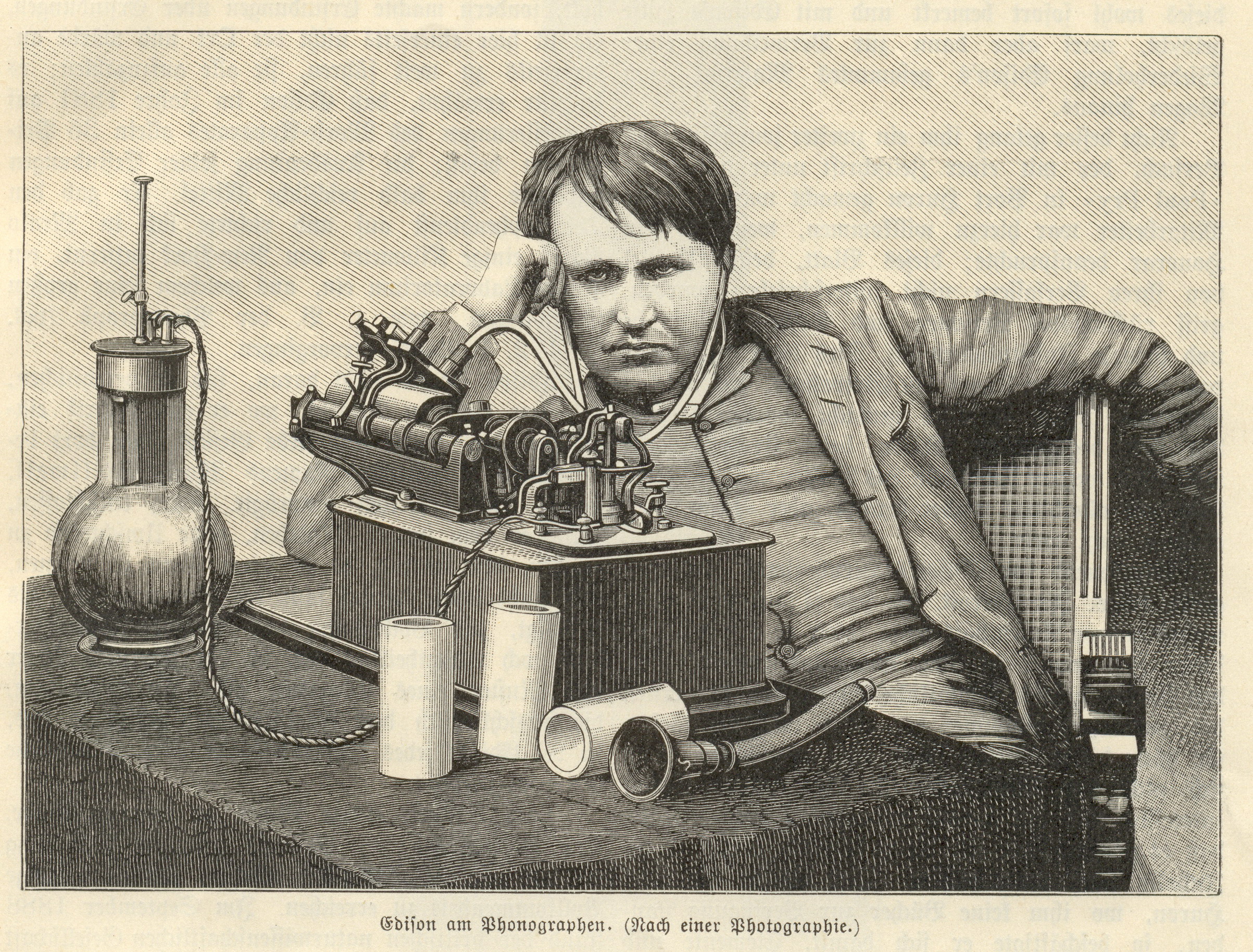
But, long distance transmission is typically hundreds of thousands of Volts. This has traditionally been done in AC, going back to the current wars of the 1880s and Edison's fried elephants. You can see a picture, the caption of which is "Edison am Phonographen. (Nach einer Phonographie)". My German's not very good, but this probably means: "Edison pissed off. (At losing current wars to arch-rival Tesla)"
 

AC voltage switchers have been around for a long time, but DC voltage switchers are relatively new. Long distance DC transmission is possible, and would make sense for large-scale solar farms. 

But if the electricity were being transmitted at 200 kv, that's a thousand times more voltage, a thousand times less current and a million times less power loss for each metre of cable. So the electric companies lose the same in a km of their cables as I do in a millimetre of mine. For each metre of cable in my house, they could send electricity to Tokyo and back.

Of course they have to get the voltage up and down, which has its own losses, and when long-distance AC power cables reach a town or village, the voltage is stepped down to one or two hundred volts, which can be used in houses, offices or factories, so it will lose at the same rate on the local grid as electricity from domestic solar panels.

This kind of small scale production is still rather new, and goes against Tesla's model of big production and distant transmission. This model has allowed dirty power stations, first coal then nuclear, to be built far away from centres of population. A big problem with AC is that it cannot be stored, and must be there when the power is switched on. Rather than energy that can be saved, it is power that must be used. DC can be stored in batteries; technology that is developing rapidly now that most people have one in the phone in their pocket. The only kind of AC storage available is when hydroelectric dams are used to pump water up a hill when there is excess supply, and let it down when there is excess demand. 

Another issue, for another blog, is the variability of output from the panels, especially on partly cloudy days, when it could rapidly change as the sun goes behind and emerges from clouds, and what can be done about that.